Osaka Residents Show Lukewarm Response to 'Sub-Capital' Bill, Asahi Poll Reveals
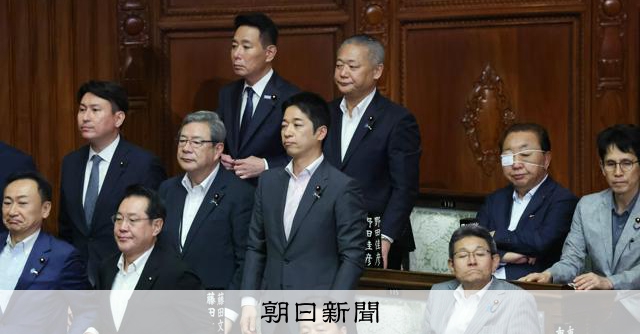
A recent poll conducted by the Asahi Shimbun indicates that residents of Osaka prefecture are largely indifferent to the "sub-capital" bill, a legislative proposal strongly advocated by the Japan Innovation Party (JIP). The bill aims to establish Osaka as a secondary capital, a concept the JIP has championed for some time. Despite the party's persistent efforts and focus on this initiative, the survey suggests a significant portion of the Osaka populace does not share the same enthusiasm. The poll's findings imply a disconnect between the JIP's political agenda and the immediate concerns or priorities of the people they represent in Osaka. This lukewarm reception raises questions about the public's appetite for such a significant governmental restructuring at this time. Further analysis of the poll data might reveal specific reasons for this public sentiment, such as economic conditions, other pressing local issues, or a general skepticism towards large-scale political projects. The outcome suggests that the JIP may need to reassess its strategy for garnering public support for its flagship policies.
The JIP's push for a 'sub-capital' in Osaka highlights a common political strategy of proposing ambitious, large-scale projects to galvanize support and project a vision for the future. However, the lukewarm public response, as indicated by the Asahi poll, suggests a potential disconnect between elite-driven policy initiatives and grassroots public sentiment. This dynamic raises questions about the efficacy of top-down governance models in diverse democratic societies, particularly when perceived public needs and priorities may lie elsewhere. In the context of the evolving AI era, where societal structures are increasingly subject to technological disruption, the focus on physical capital relocation might be seen as a traditional approach that overlooks more agile, digitally-enabled forms of governance and economic development. The JIP's challenge will be to articulate how such a physical restructuring aligns with future societal needs and offers tangible benefits to the average citizen, rather than appearing as a politically motivated endeavor.
AI-generated to prompt reflection — not editorial opinion, not advice, not a statement of fact. How this works.