Over 3 Tons of Cocaine Seized in Atlantic Operation Involving Brazil, US Agencies
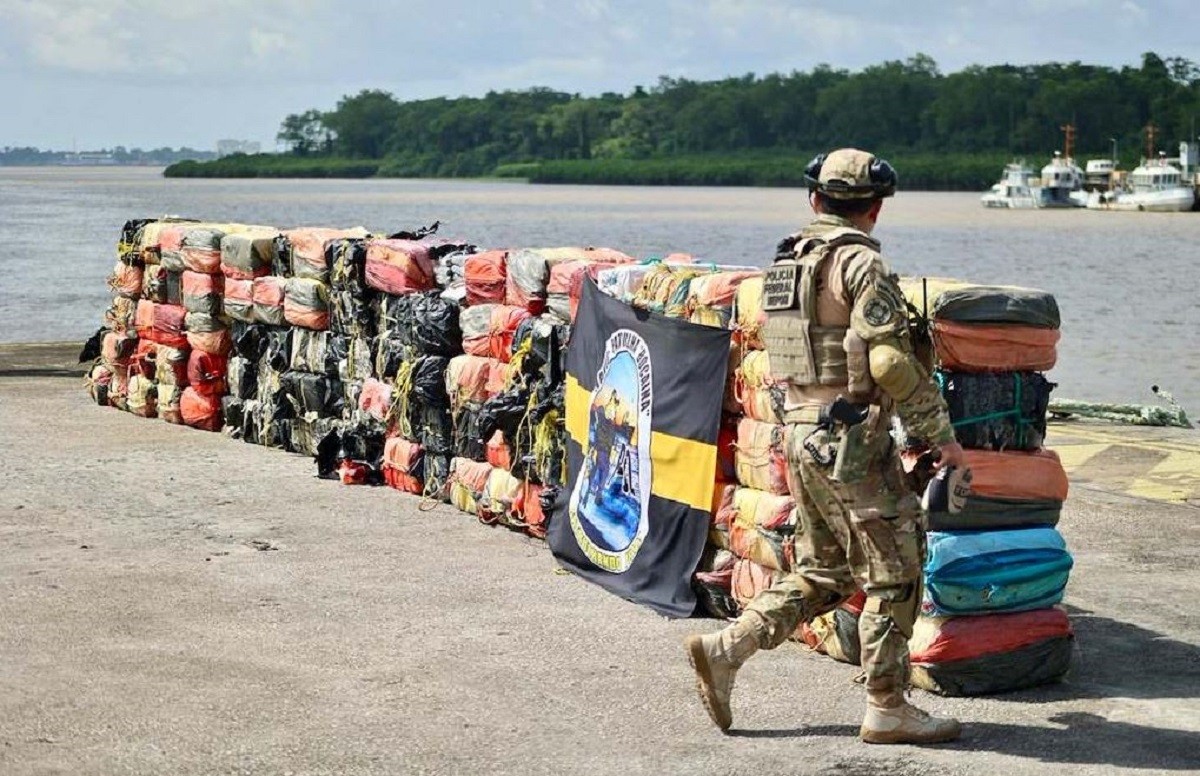
Brazilian Federal Police (PF) and the Navy, with support from U.S. agencies, have seized over three tons of cocaine from a fishing vessel in international waters. The operation, which occurred on Tuesday, March 7th, intercepted a wooden fishing boat approximately 1,500 kilometers off the coast of Pará, Brazil, near Suriname. Four individuals, identified as Paraense residents, were apprehended on board and are now detained in Belém on charges of international drug trafficking. The total weight of the seized cocaine amounted to 3,748 kilograms, found packaged and concealed in the vessel's hull. Images of the boat and the illicit cargo were released by the PF and Navy on Monday, March 13th. The seized vessel arrived in Belém on March 13th, where the final count of the drugs was completed. The delay between the interception and the boat's arrival in port was attributed to the significant distance and navigation challenges. Authorities suspect the boat departed from Pará empty and received the drug shipment at sea, with its final destination believed to be Guinea, on the African coast. The successful interdiction was facilitated by intelligence sharing and collaboration with U.S. entities, including the Drug Enforcement Administration (DEA) and the Joint Interagency Task Force South (JIATF-South). Investigations into the drug trafficking network are ongoing.
This interdiction highlights the complex international dynamics of drug trafficking networks and the increasing reliance on multinational cooperation for law enforcement. The involvement of U.S. agencies like the DEA and JIATF-South underscores a shared strategic interest in disrupting drug flows through critical maritime routes. The operation's success, while significant, also points to the persistent challenge of interdicting large quantities of narcotics, suggesting that the demand driving these shipments remains robust. Future efforts will likely focus on enhancing intelligence sharing and interdiction capabilities, while also considering the systemic factors that contribute to drug production and transit in source and intermediary regions. The long transit time for the seized vessel suggests logistical sophistication, indicating a need for continuous adaptation in interdiction strategies to counter evolving trafficking methods.
AI-generated to prompt reflection — not editorial opinion, not advice, not a statement of fact. How this works.