Over 400 Displaced by Flooding and Heavy Rains in Brazil's Rio Grande do Sul
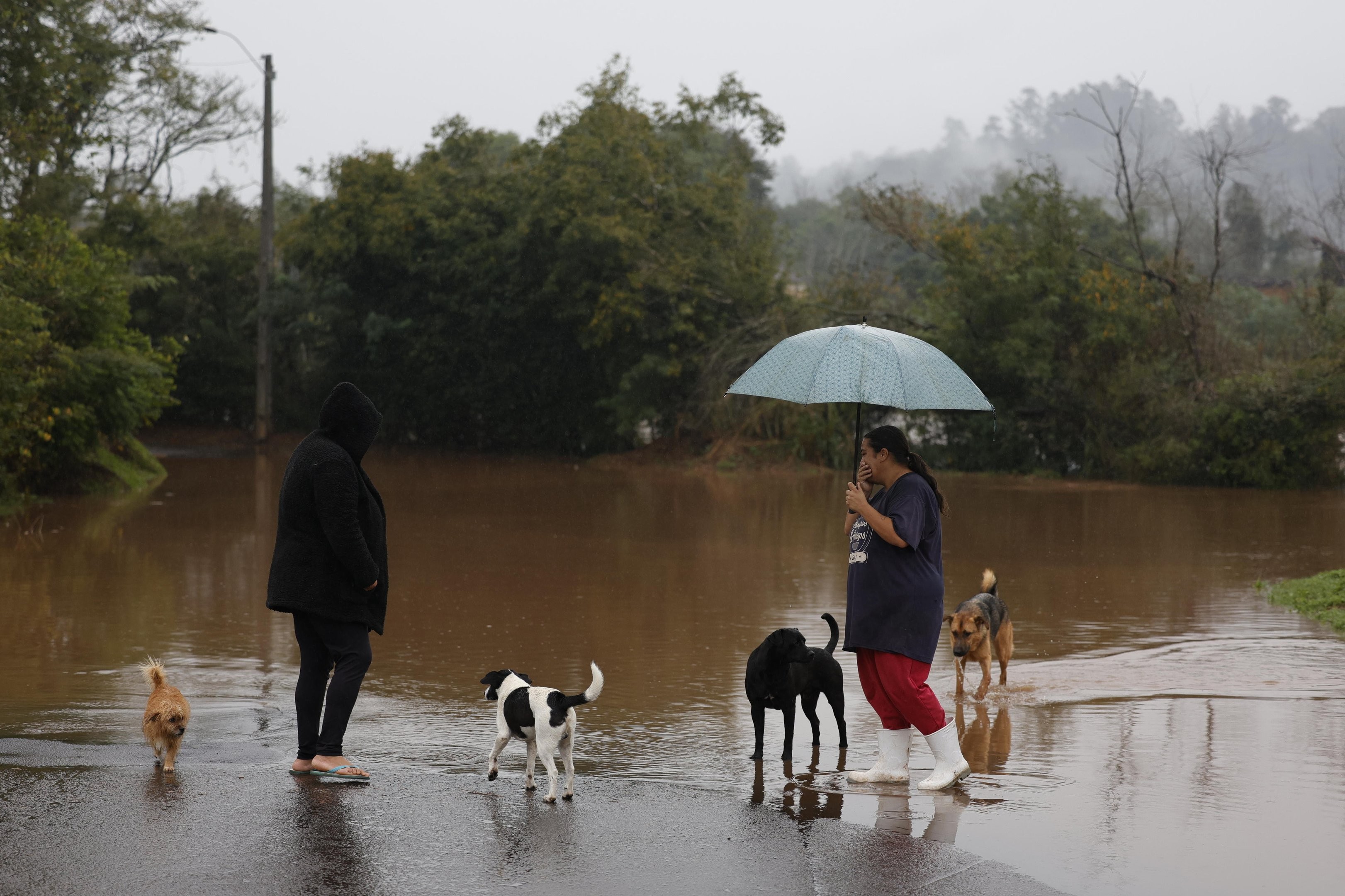
Heavy rainfall and rising rivers have displaced approximately 460 people in the Brazilian state of Rio Grande do Sul, according to the state's Secretariat of Social Development. The constant downpours have caused rivers to exceed flood levels, leading to widespread inundation across 143 municipalities as of Wednesday, May 22nd. The most affected areas include Lajeado, with 201 displaced individuals, and Muçum, Estrela, and Encantado, reporting 46, 45, and 40 people without homes, respectively. Other cities with significant numbers of displaced residents are Santa Cruz do Sul (33), São Sebastião do Caí (31), Roca Sales (20), Passo Fundo (19), Cruzeiro do Sul (16), and Bom Retiro do Sul (10). The intense weather events, including heavy rain, strong winds, hail, landslides, and floods, have severely impacted the region. In just 12 hours, Marcelino Ramos recorded 138 mm of rain, while Paraí in the Serra Gaúcha received over 200 mm in 24 hours. The Civil Defense has issued high hydrological risk warnings, particularly for the Taquari and Caí valleys, where river levels have surpassed flood stages, a situation not initially anticipated.
The extreme weather events in Rio Grande do Sul highlight the increasing vulnerability of communities to climate-related disasters. The rapid rise of rivers beyond predicted flood levels underscores the need for more sophisticated hydrological modeling that accounts for the amplified intensity and frequency of rainfall events, potentially driven by broader climate shifts. This situation presents a critical challenge for regional infrastructure planning and disaster preparedness, emphasizing the importance of resilient urban development and early warning systems. Future investments should focus on enhancing natural flood defenses and improving drainage infrastructure to mitigate the impact of such recurring events, fostering long-term community safety and economic stability in the face of environmental uncertainty.
AI-generated to prompt reflection — not editorial opinion, not advice, not a statement of fact. How this works.