Over 50,000 Migrants Attempt to Enter Spain from Morocco in 24 Hours
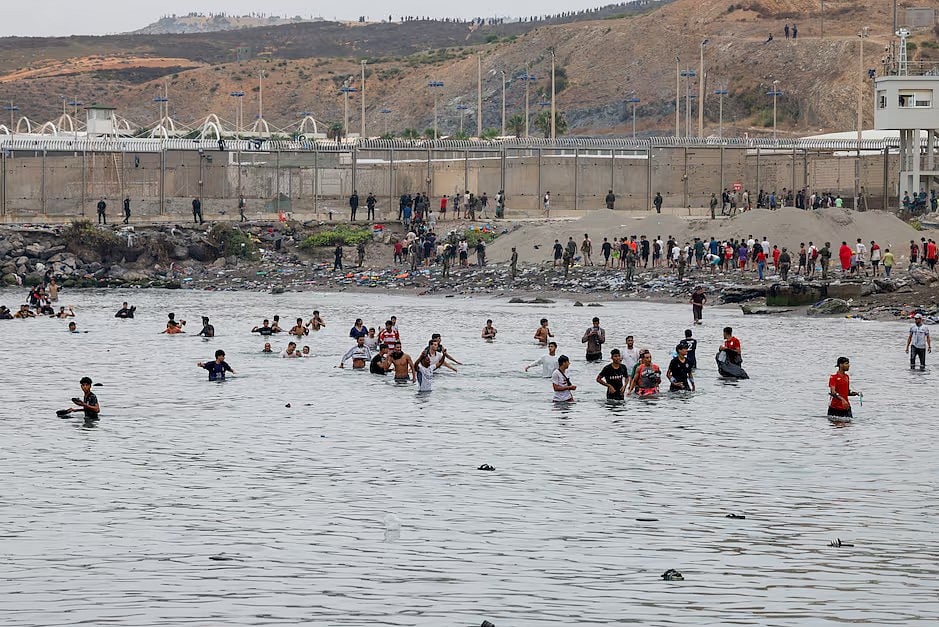
In recent days, a chaotic and dangerous situation unfolded at the Ceuta border when over 50,000 people attempted to enter Spain. The influx of individuals breached border controls, highlighting the precarious conditions faced by those seeking entry. This mass movement underscores the significant challenges at the Spain-Morocco border. The sheer volume of people attempting to cross in such a short period indicates a surge in migration pressures. The events at Ceuta raise serious questions about border security and humanitarian responses. Authorities are grappling with managing the large number of arrivals and assessing their circumstances. The situation demands careful consideration of both national security and the welfare of the migrants. The specific reasons for this sudden large-scale attempt to enter Spain are under discussion, with a focus on the dynamics surrounding Ceuta and Melilla.
The recent surge of over 50,000 individuals attempting to cross into Spain from Morocco within a 24-hour period highlights critical systemic pressures at the European Union's southern border. This event underscores the complex interplay of geopolitical factors, economic disparities, and the persistent global challenge of irregular migration. The breach of border controls suggests a breakdown in established management protocols, potentially driven by escalating push factors in origin countries and evolving transit routes. Future policy discussions will likely need to address not only border security but also the underlying drivers of migration, seeking sustainable solutions that balance national sovereignty with humanitarian obligations. The long-term implications for regional stability and integration policies in Europe warrant careful consideration.
AI-generated to prompt reflection — not editorial opinion, not advice, not a statement of fact. How this works.