Overcrowded Traditional Boats Strain Mekong Delta Tourist Isle
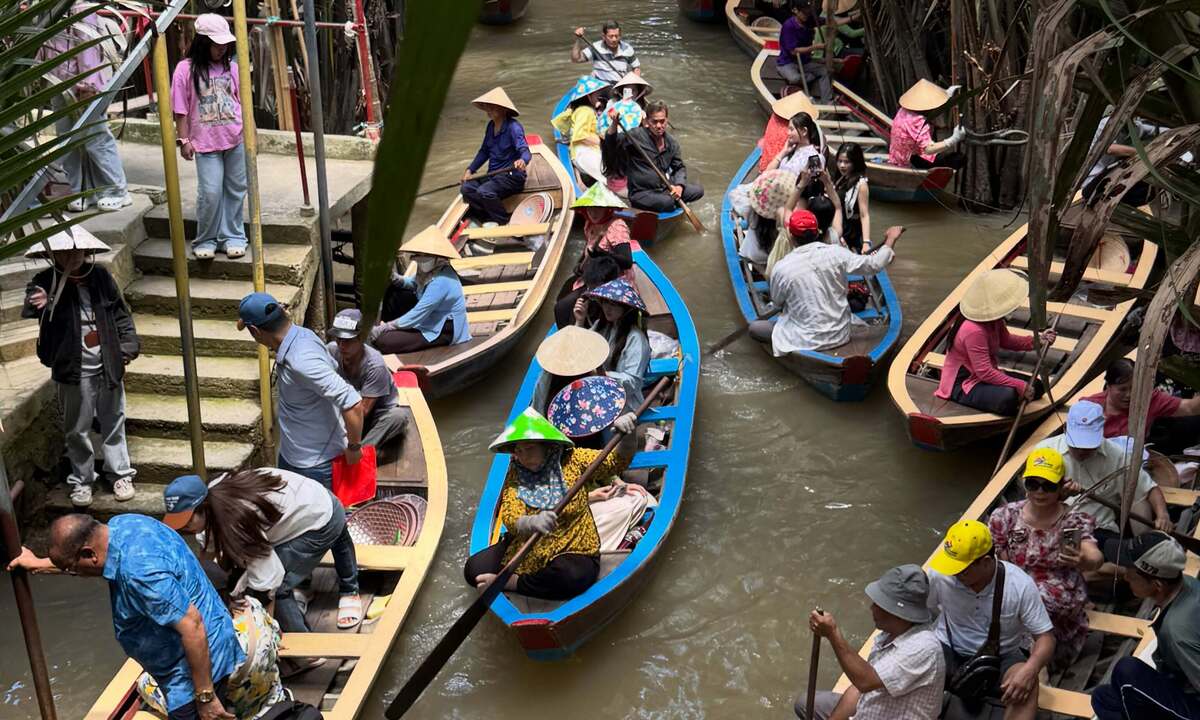
The tourist island of Thới Sơn in Vietnam's Mekong Delta has experienced a surge in visitors over the past three months. This influx has led to frequent overcrowding of traditional three-plank boats, known as 'xuồng ba lá', on the Bà Ngoạn canal. The increased demand for transport on the island's waterways has created a challenging situation for both tourists and local operators. The scenic beauty and unique cultural experiences of Thới Sơn attract many, but the current infrastructure struggles to cope with the rising numbers. This situation highlights a potential bottleneck in the region's tourism development, where popular destinations face pressure from their own success. The overcrowding of these small vessels raises concerns about safety and the overall visitor experience. Addressing this imbalance between visitor numbers and transport capacity will be crucial for sustainable tourism in the area.
The surge in tourism to Thới Sơn, while economically beneficial, has exposed infrastructure limitations, particularly concerning the capacity of traditional transport. This situation presents a classic challenge in destination management: balancing growth with sustainability. The reliance on small, traditional boats for transport suggests a need for investment in more diversified and potentially larger-capacity vessels, or improved scheduling and capacity management systems. Over the next decade, as AI and data analytics become more sophisticated, similar tourist hotspots may leverage predictive modeling to anticipate demand and optimize resource allocation, thereby mitigating overcrowding and enhancing safety and visitor satisfaction. The current scenario prompts consideration of how to scale tourism operations without compromising the authentic experience or the environment.
AI-generated to prompt reflection — not editorial opinion, not advice, not a statement of fact. How this works.