Own Goal Sets New Record in 2026 World Cup
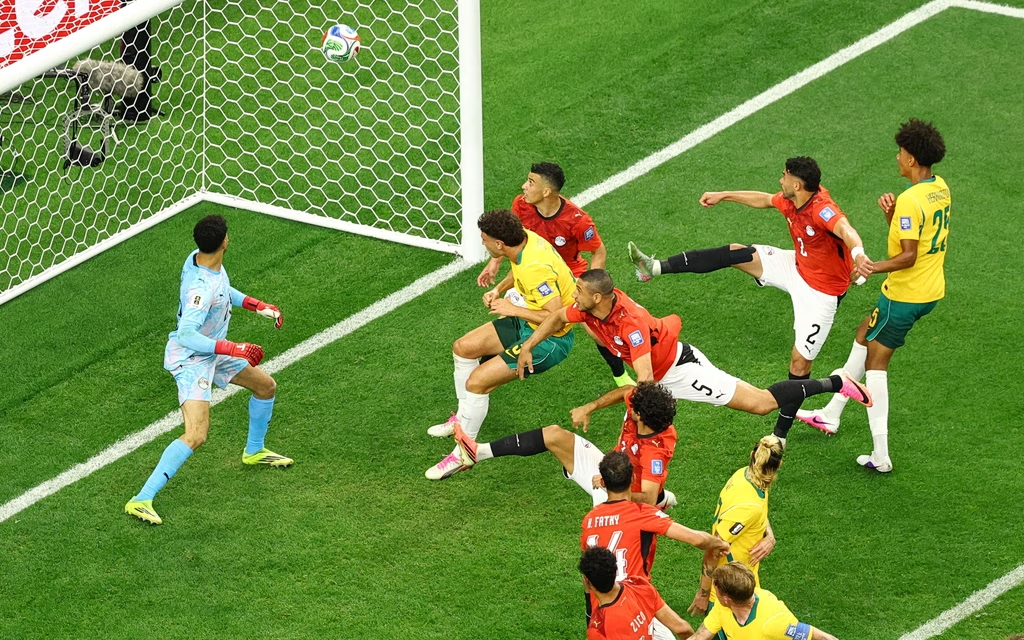
Mohamed Hany inadvertently scored an own goal, leveling the match between Egypt and Australia at 1-1. This unfortunate moment marked the 13th own goal of the 2026 World Cup, establishing a new all-time record for the tournament. The previous record of 12 own goals was surpassed by Hany's contribution. The match saw Australia capitalize on the defensive error to equalize the score. This event highlights a concerning trend in the current World Cup, with an unprecedented number of own goals being scored. The implications of this record for defensive strategies and player performance are yet to be fully understood. Further analysis may reveal underlying factors contributing to this unusual statistic.
The 2026 World Cup has seen an unprecedented 13 own goals, setting a new negative record. This trend may indicate increased pressure on defenses, potentially due to tactical shifts or the intensity of modern tournament play. From a systems perspective, the sheer volume of own goals could prompt FIFA and participating federations to review player training, defensive strategies, and perhaps even the impact of specific pitch conditions or equipment on play. Over the next decade, as AI influences sports analytics and player performance monitoring, understanding such anomalies could lead to more targeted interventions to improve player safety and game integrity, rather than solely focusing on offensive metrics. This record serves as a data point for evaluating the evolving dynamics of high-stakes international football.
AI-generated to prompt reflection — not editorial opinion, not advice, not a statement of fact. How this works.