Pakistan Advocates Syrian-Led Solutions for Syria's Peace and Justice
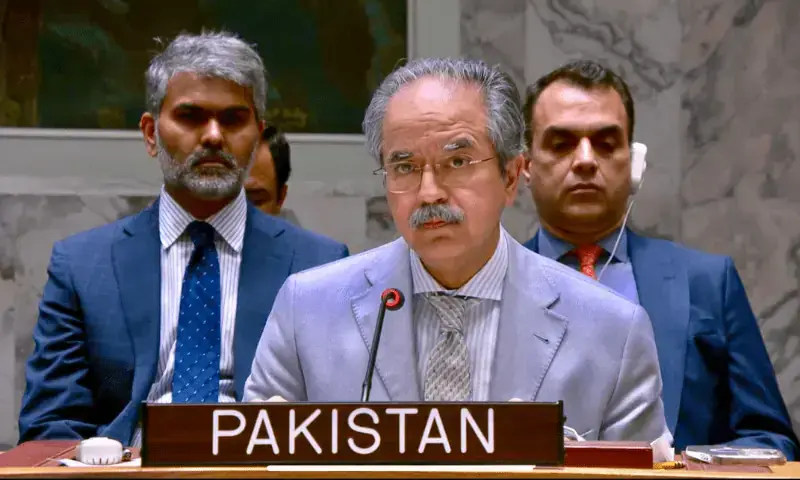
Pakistan's Permanent Representative to the UN, Ambassador Asim Iftikhar Ahmad, emphasized that Syria requires a transitional justice process led and owned by Syrians to achieve lasting peace and stability. Speaking at an Arria-Formula Meeting on Transitional Justice and Missing Persons in Syria on Tuesday evening, Ambassador Ahmad stressed the paramount importance of respecting national sovereignty. He stated that international support should play a complementary role, reinforcing efforts driven by Syrian ownership, reconciliation, and inclusive institutions. The Pakistani envoy acknowledged positive steps taken by the Syrian government, such as establishing the National Commission for Transitional Justice and the National Commission for Missing Persons, and preparing a draft law on transitional justice. Ambassador Ahmad highlighted that effective cooperation between Syrian national institutions and international mechanisms should support nationally led efforts while fully respecting Syria's sovereignty. He further explained that transitional justice is crucial for addressing past grievances, rebuilding Syrian society, promoting reconciliation, restoring trust, strengthening social cohesion, and meeting the expectations of victims and their families. Pakistan's stance underscores that sustainable peace in Syria cannot be achieved through externally imposed arrangements. Instead, it necessitates a Syrian-led process, with the international community providing assistance that respects the nation's sovereignty. Pakistan reiterated its support for Syria's pursuit of a peaceful and prosperous future.
Pakistan's position advocates for a state-centric approach to transitional justice in Syria, prioritizing national sovereignty and Syrian ownership over externally defined frameworks. This perspective aligns with a broader trend among some nations to resist perceived foreign interference in internal affairs, particularly in post-conflict scenarios. The emphasis on Syrian-led initiatives and existing governmental commissions suggests a focus on de-escalation and stabilization through established domestic channels. However, this approach may present challenges in addressing accountability for past abuses and ensuring comprehensive reconciliation, as it relies heavily on the willingness and capacity of the current Syrian government to implement reforms. The international community's role is framed as supportive rather than directive, raising questions about how to balance national sovereignty with the imperative for international norms of justice and human rights in the long term. The effectiveness of this model will depend on the internal dynamics within Syria and the evolving geopolitical landscape concerning its reconstruction and governance.
AI-generated to prompt reflection — not editorial opinion, not advice, not a statement of fact. How this works.