Pakistan Aims to Halve Population Growth Rate by 2035
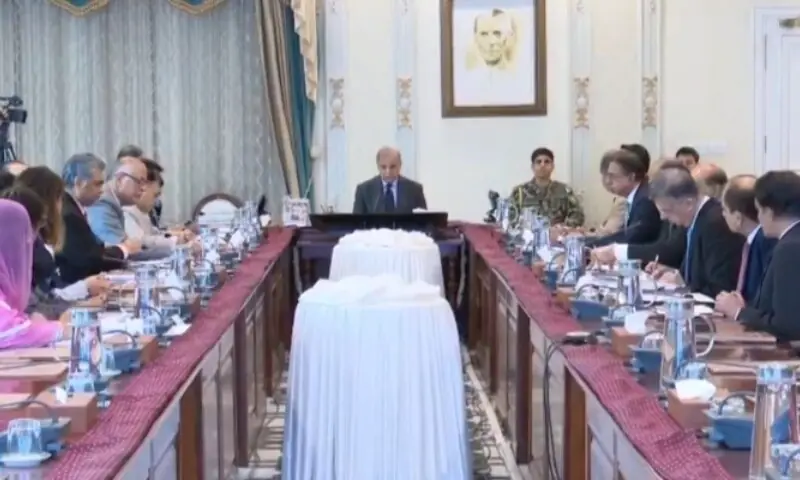
The Pakistani federal government is developing a comprehensive strategy to significantly reduce the nation's population growth rate. Prime Minister Shehbaz Sharif has identified the rapidly increasing population as one of Pakistan's most significant national challenges. The government plans to convene a meeting with provincial administrations, Gilgit-Baltistan, Azad Jammu and Kashmir, and other stakeholders to formulate this strategy. The objective is to lower the current population growth rate of 2.55% to 1.25% by the year 2035. Prime Minister Sharif emphasized that population control and welfare measures are a national responsibility, requiring alignment with national development, economic stability, and human resource development. Enhanced coordination among provinces and effective public awareness campaigns are deemed crucial for achieving population stabilization. A National Population Council meeting is to be convened at the earliest, with operating procedures for its secretariat finalized and a National Population Stabilisation Plan 2026-2035 in preparation. This plan will provide a unified national framework, prioritizing healthcare, education, youth development, female labor force participation, vocational training, and social safety nets, while also aligning federal social protection programs with population welfare goals. Separately, Prime Minister Sharif welcomed a Chinese investment from FAMSUN to modernize Pakistan's grain storage infrastructure, aiming to deepen bilateral strategic ties and introduce modern agricultural technologies. This initiative includes skills development for the local workforce and the establishment of a demonstration center for green silos, with an MoU already signed with the Green Pakistan Initiative.
The Pakistani government's initiative to address population growth reflects a strategic recognition of demographic pressures on national development and resource allocation. By setting a clear target of halving the growth rate by 2035 and outlining a multi-faceted approach encompassing healthcare, education, and economic empowerment, the policy aims to foster sustainable development. The integration of population planning with broader socio-economic objectives, such as female labor force participation, suggests a forward-looking perspective that views demographic trends as intertwined with economic progress. The parallel engagement with Chinese investment for agricultural infrastructure highlights a dual focus on internal capacity building and leveraging international partnerships for modernization, underscoring the complex interplay of domestic policy and global economic dynamics in shaping national trajectories.
AI-generated to prompt reflection — not editorial opinion, not advice, not a statement of fact. How this works.