Pakistan Allocates Rs1.6 Billion for Weather Forecasting and Disaster Preparedness in FY27
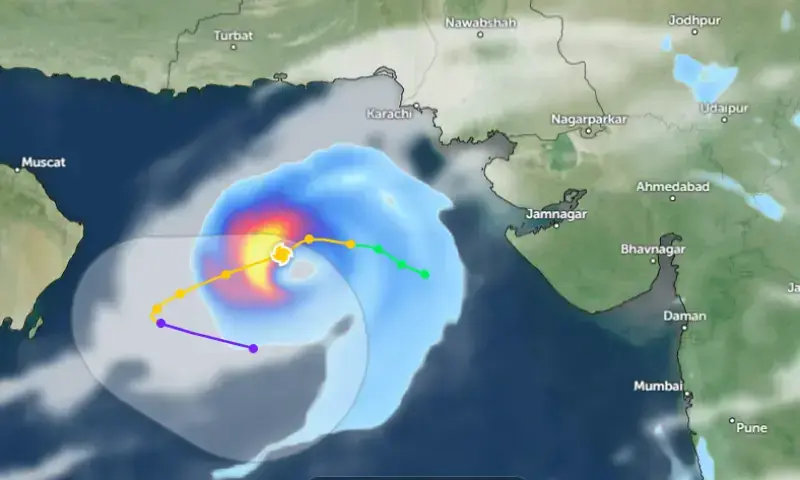
The Pakistani government has earmarked Rs1.6 billion for the Pakistan Meteorological Department (PMD) in its Fiscal Year 2026-27 budget, aiming to bolster weather forecasting and disaster preparedness. This allocation is part of a broader strategy detailed in the Annual Plan 2026-27, which includes several key projects. A significant portion, Rs344 million, is designated for the National Centre for Rainfall Enhancement to bolster water security, climate adaptation, and agricultural productivity. Additionally, Rs195 million and Rs5 million have been allocated for weather surveillance radar projects in Multan and Sukkur, respectively, to enhance real-time monitoring and early warning systems. A substantial Rs1 billion investment is planned for the "Modernisation of Hydromet Services in Pakistan" project, focusing on upgrading infrastructure and improving forecasting accuracy.
The Ministry of Climate Change and Environmental Coordination will receive Rs2.48 billion for FY27, with primary focus on forestry, biodiversity, afforestation, and ecosystem restoration. Initiatives include the "Pakistan Climate Innovation and Green Growth Initiative" to foster green skills and entrepreneurship, and a National Forest and Tree Cover Assessment utilizing advanced technologies. The government also plans to promote climate-smart agriculture, efficient water management, disaster risk reduction, green industrialization, and circular economy principles. These efforts are critical given Pakistan's increasing vulnerability to climate disasters, which have caused significant economic losses, estimated at $2 billion annually from floods and earthquakes, with projections of much higher future damages.
Pakistan's substantial budget allocation towards weather forecasting and climate resilience in FY27 signals a strategic response to escalating climate-related risks, underscored by past flood damages projected to reach trillions by 2050. The planned investments in radar systems, rainfall enhancement, and hydromet services aim to improve predictive capabilities, a crucial step for mitigating future economic and human losses. However, the concurrent reduction in allocations for mitigation and adaptation funds, as noted by the Senate Committee, presents a potential contradiction. This suggests a complex policy environment where immediate disaster preparedness is prioritized, but long-term climate change mitigation and adaptation efforts may face funding challenges. Future policy will need to reconcile these priorities, ensuring that investments in resilience are complemented by robust, sustained funding for broader climate action to address systemic vulnerabilities.
AI-generated to prompt reflection — not editorial opinion, not advice, not a statement of fact. How this works.