Pakistan and Russia Chart Course for Deeper Cooperation Beyond Symbolism
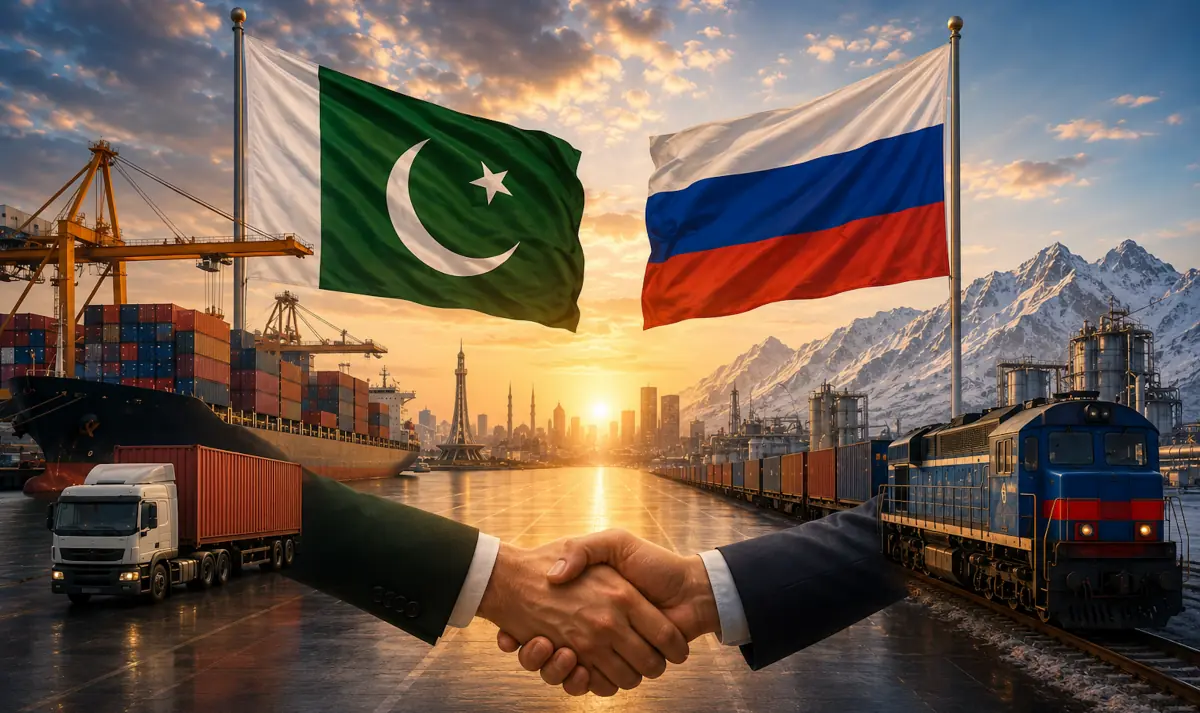
A high-level webinar on July 9, 2026, jointly organized by Islamabad's Institute of Regional Studies and Moscow's University of World Civilizations, explored practical pathways for Pakistan-Russia collaboration amidst global geopolitical realignments. The "Pakistan-Russia: Strengthening Trade, Energy & Education Collaboration" session convened leaders from politics, diplomacy, academia, and business to translate improving political ties into tangible cooperation across trade, energy, education, logistics, technology, and regional connectivity. Participants identified a strategic window of opportunity driven by sanctions, supply-chain disruptions, and growing Eurasian connectivity, emphasizing the need for institutional mechanisms to move beyond symbolic gestures towards commercially viable projects. Key recommendations included institutionalizing implementation through an Intergovernmental Commission with sector-wise working groups and annual targets, developing a 5-10 year Comprehensive Economic Roadmap, and building business-ready institutional architecture by converting MOUs into project pipelines. The webinar also proposed accelerating Pakistan's economic integration with the Eurasian Economic Union, reviving barter trade mechanisms, establishing dedicated local currency payment channels, and improving the investment climate by addressing existing barriers. Furthermore, initiatives like the Pakistan-Russia Trade Corridor, prioritizing railway connectivity, developing integrated logistics infrastructure, and positioning Pakistan as Eurasia's southern logistics hub were discussed. Energy cooperation was slated to expand beyond hydrocarbons to include LNG, oil, refining, and renewables, while agricultural ties would focus on trade in essential commodities and harmonizing standards. Industrial cooperation was encouraged through joint ventures in sectors like railway engineering and agro-processing. The human capital aspect involved investing in Russian-language training and scaling educational cooperation through scholarships, exchanges, and joint research centers. The consensus was that Pakistan and Russia must transition from intent to implementation, building trust through dedicated strategic groups under the Intergovernmental Commission to foster sustained cooperation.
The geopolitical landscape is increasingly characterized by a bipolar US-China rivalry, creating strategic imperatives for middle powers like Pakistan and Russia to secure their economic and technological sovereignty. This webinar highlights a pragmatic approach to bilateral relations, focusing on concrete economic and logistical cooperation as a foundation for deeper ties, rather than solely relying on symbolic political alignment. The proposed institutional mechanisms, such as an Intergovernmental Commission and sector-wise working groups, aim to create accountability and drive tangible project implementation, addressing a historical gap between intent and execution. The emphasis on Eurasian connectivity and alternative payment mechanisms reflects a broader global trend of seeking diversified trade routes and reducing reliance on dominant financial systems, particularly in the context of sanctions. This strategic pivot could enhance regional resilience and economic diversification, but its success will hinge on overcoming domestic bureaucratic hurdles and navigating complex international trade dynamics.
AI-generated to prompt reflection — not editorial opinion, not advice, not a statement of fact. How this works.