Pakistan and Russia to Forge Joint Strategy Against Terror Networks in Afghanistan
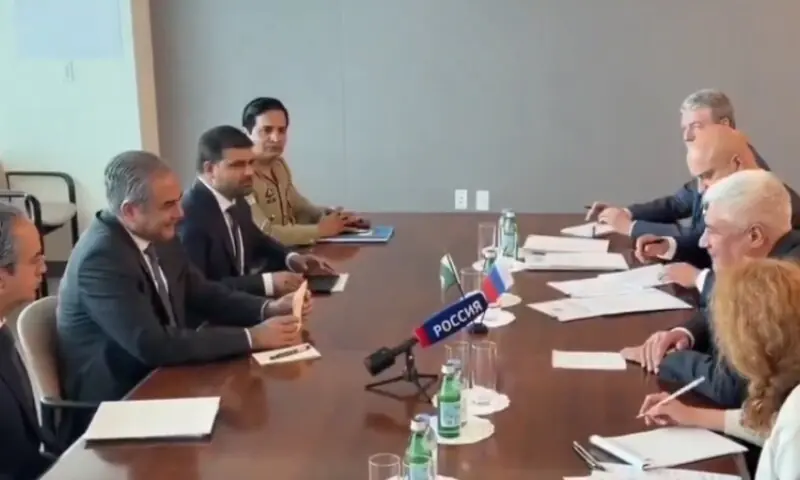
Pakistan and Russia have agreed to develop a joint strategy targeting terrorist networks operating from Afghanistan. This agreement was reached on Wednesday during a meeting between Pakistan's Interior Minister Mohsin Naqvi and Russia's Interior Minister Vladimir Alexandrovich Kolokoltsev, held on the sidelines of the fifth United Nations Chiefs of Police Summit (UNCOPS-2026) in New York. The two ministers discussed regional security, counterterrorism, counter-narcotics, cybercrime, and law-enforcement training. They also explored possibilities for joint police exercises and coordinated actions against regional terrorist groups. A memorandum of understanding (MoU) is planned to formalize bilateral cooperation between their ministries. Minister Naqvi highlighted that over 25 terrorist organizations are active in Afghanistan, emphasizing that combating extremist groups is a shared global responsibility requiring coordinated efforts. During the summit, Naqvi also addressed the broader international community, calling for enhanced global cooperation to address transnational threats such as terrorism, organized crime, cybercrime, drug trafficking, and money laundering. He stressed that no single country can tackle these challenges alone and urged for increased information sharing, mutual trust, and stronger partnerships among law enforcement agencies. Naqvi also underscored the importance of adapting police forces to technological advancements and improving officer training to counter evolving criminal methods.
This high-level meeting between Pakistan and Russia signals a strategic alignment on regional security, particularly concerning threats emanating from Afghanistan. The initiative to develop a joint counterterrorism strategy suggests a shared recognition of the limitations of unilateral approaches in addressing complex, transnational security challenges. The emphasis on institutionalizing cooperation through an MoU indicates a commitment to sustained engagement beyond immediate political cycles. From a systemic perspective, this collaboration could enhance intelligence sharing and operational coordination, potentially disrupting terrorist financing and operational capabilities. However, the effectiveness will depend on the depth of trust, the transparency of information exchange, and the alignment of national interests, especially given the evolving geopolitical landscape. The broader call for international cooperation highlights a global trend toward recognizing interconnected security threats, pushing nations to consider collective action frameworks in an increasingly complex world.
AI-generated to prompt reflection — not editorial opinion, not advice, not a statement of fact. How this works.