Pakistan Anti-Graft Body Seizes Tallest Building in Karachi Amid Money Laundering Probe
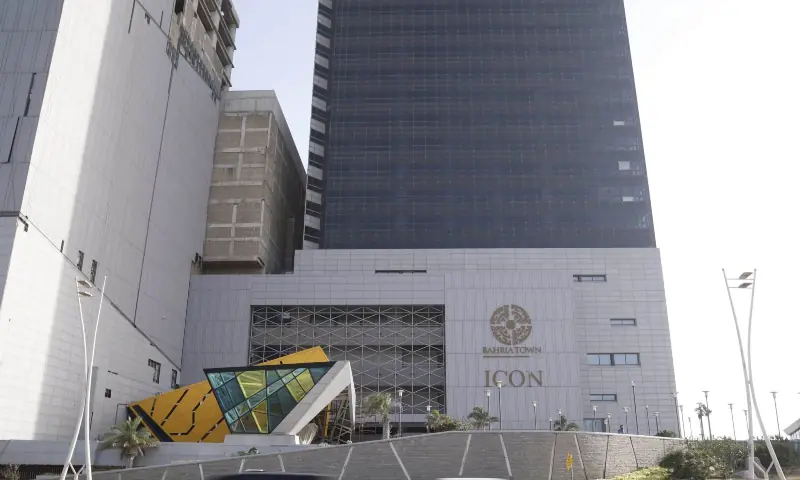
Pakistan's National Accountability Bureau (NAB) has taken physical possession of the Bahria Icon Tower in Karachi, the country's tallest building, following a money laundering investigation against prominent real estate tycoon Malik Riaz. The seizure, confirmed by a Rawalpindi accountability court on July 3, 2026, stems from allegations that the property's construction and land acquisition were funded by criminal proceeds. NAB sources indicated that the investigation against M/s Galaxy Construction Private Limited established a link between the property and money laundering activities. The tower, valued at approximately Rs100 billion, was provisionally attached under the Anti-Money Laundering Act, 2010, after evidence suggested Rs8 billion in crime proceeds were laundered for its construction. This action is part of a broader effort by NAB to recover assets linked to illicit activities. The bureau has previously issued non-bailable arrest warrants for Malik Riaz and others in a land grab case related to Bahria Town Karachi and has frozen other high-value properties. Riaz is also reportedly an absconder in the £190 million Al Qadir Trust Case. NAB has also attached another Bahria Town property on Tariq Road, allegedly held under a "benami" frontman for Riaz, and filed a reference in 2020 regarding the illegal allotment of land for one of these properties.
The NAB's seizure of the Bahria Icon Tower highlights the increasing focus on asset recovery in anti-money laundering efforts within Pakistan's real estate sector. This action underscores the potential for significant state intervention when financial investigations link high-value properties to alleged proceeds of crime. Such measures, while aimed at combating financial crime, can introduce considerable market uncertainty and impact investor confidence in the property market. The long-term implications will depend on the transparency and efficiency of the legal and recovery processes, as well as the government's ability to foster a stable regulatory environment that balances enforcement with economic growth. Future developments may involve greater scrutiny of beneficial ownership structures in large-scale property developments.
AI-generated to prompt reflection — not editorial opinion, not advice, not a statement of fact. How this works.