Pakistan Backs Saudi Self-Defense Rights Amidst Regional Tensions
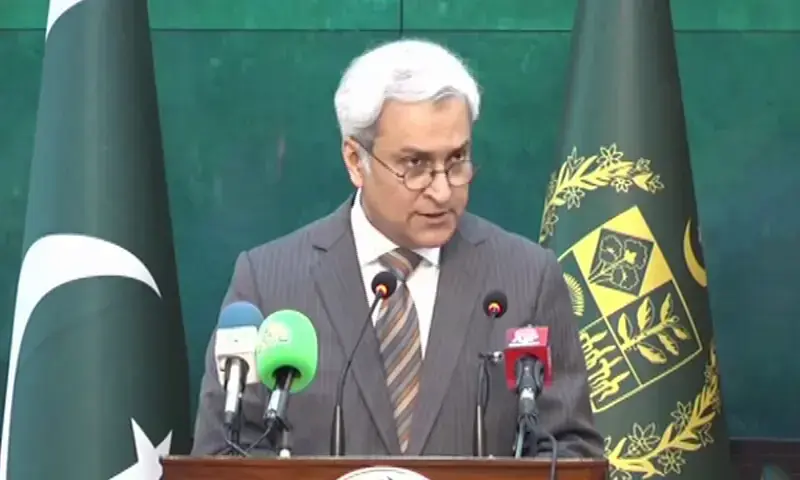
Pakistan has officially endorsed Saudi Arabia's recent air strikes in Iraq, characterizing them as a legitimate exercise of the kingdom's right to self-defense under Article 51 of the UN Charter. Foreign Office spokesperson Tahir Andrabi stated this during a weekly briefing, following coordinated strikes by Saudi Arabia and the United States against Iraq's Popular Mobilisation Units. These actions were prompted by accusations that elements within the PMU were targeting Saudi oil facilities. Andrabi condemned attacks by non-state actors against Saudi Arabia, emphasizing that such developments in the Gulf, Strait of Hormuz, and Red Sea are concerning. He reaffirmed Pakistan's commitment to honor all defense cooperation agreements with its Gulf partners, including Saudi Arabia, Kuwait, Bahrain, and Jordan. These agreements, while varying in scope, are intended for peacetime cooperation, with implementation during wartime to be assessed by both parties. Despite these defense pacts, Pakistan maintains that its role as a mediator in the Iran-US conflict remains unaffected, asserting that defense agreements and mediation efforts operate independently. The spokesperson highlighted Pakistan's ongoing diplomatic efforts to de-escalate tensions between Washington and Tehran, urging dialogue and adherence to the Islamabad MoU. In a separate announcement, Pakistan confirmed it will invite India to the Shanghai Cooperation Organisation (SCO) Heads of State Summit it will host next year, fulfilling its obligation as the host nation. This invitation follows a previous instance where India did not send its Prime Minister to an SCO meeting hosted by Pakistan. The Foreign Office also confirmed the recent exchange of assignment visas between Pakistan and India for diplomatic personnel, describing it as a routine administrative arrangement rather than an improvement in bilateral relations.
Pakistan's affirmation of Saudi Arabia's self-defense rights, coupled with its commitment to existing defense pacts, signals a strategic alignment within the Gulf region amidst escalating geopolitical tensions. This stance, while reinforcing regional security partnerships, concurrently highlights the delicate balancing act Pakistan attempts to maintain as a mediator between Iran and the United States. The nation's foreign policy appears designed to leverage its strategic location and diplomatic neutrality while securing its defense interests through bilateral agreements. The invitation extended to India for the SCO summit, despite ongoing bilateral complexities, suggests a pragmatic approach to multilateral diplomacy, prioritizing institutional obligations over immediate political friction. This dual strategy underscores the intricate interplay of national security imperatives, regional stability concerns, and the pursuit of diplomatic influence in a complex geopolitical landscape.
AI-generated to prompt reflection — not editorial opinion, not advice, not a statement of fact. How this works.