Pakistan Braces for Flooding as Heavy Monsoon Rains Trigger Warnings
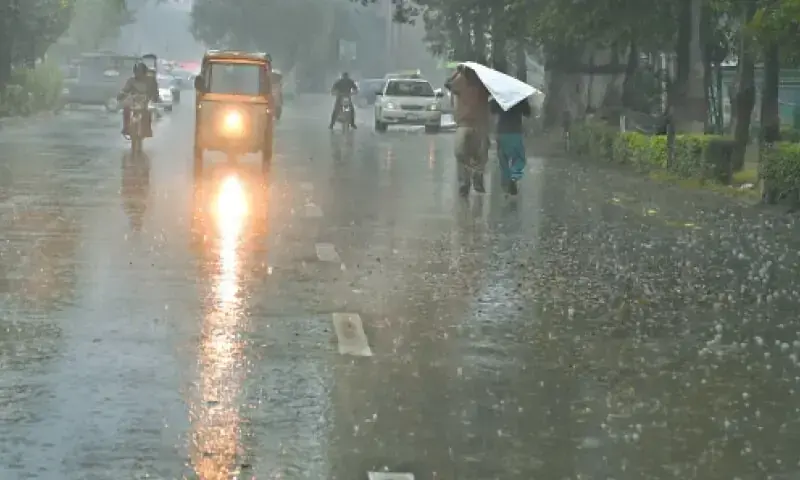
Pakistan's meteorological department has issued a warning for heavy monsoon rains expected on Tuesday, potentially causing urban flooding and inundation in low-lying areas across several cities. Rising river flows have pushed Tarbela Dam close to its maximum capacity, with significant inflows recorded. The Flood Forecasting Division anticipates water accumulation in numerous urban centers, including Islamabad, Rawalpindi, Lahore, and Peshawar, among others. Flash flooding is also a risk in hill torrents and local streams throughout Kashmir, Khyber Pakhtunkhwa, and parts of northern Balochistan. Medium to high flows are expected in nullahs connected to the Jhelum, Chenab, and Ravi rivers. Mountainous regions in upper Khyber Pakhtunkhwa and Azad Kashmir face the threat of landslides. Authorities are on high alert, with the National Disaster Management Authority (NDMA) reviewing flood preparedness measures. The NDMA chairman met with Punjab disaster management officials to assess the situation and coordinate response efforts. Provincial departments, including health and rescue services, have been mobilized, and emergency response infrastructure is being enhanced with modern equipment and new storage facilities. Efforts are also underway to improve underground water storage and expand urban water management operations.
The approaching monsoon season presents a recurring challenge for Pakistan, highlighting the critical need for robust infrastructure and proactive disaster management. While authorities are reviewing preparedness, the consistent pattern of heavy rainfall and subsequent flooding underscores systemic vulnerabilities. The proximity of Tarbela Dam to its capacity and the widespread flood warnings suggest that current mitigation strategies may be stretched by extreme weather events. Future planning should consider climate change projections to enhance resilience, potentially through improved water management systems, early warning dissemination, and urban planning that accounts for increased water runoff. Investing in long-term adaptive measures, rather than solely reactive responses, will be crucial for minimizing future impacts on communities and infrastructure.
AI-generated to prompt reflection — not editorial opinion, not advice, not a statement of fact. How this works.
