Pakistan Cabinet Committee Rejects Gas Utilities' Plea for Accounting Standard Exemption
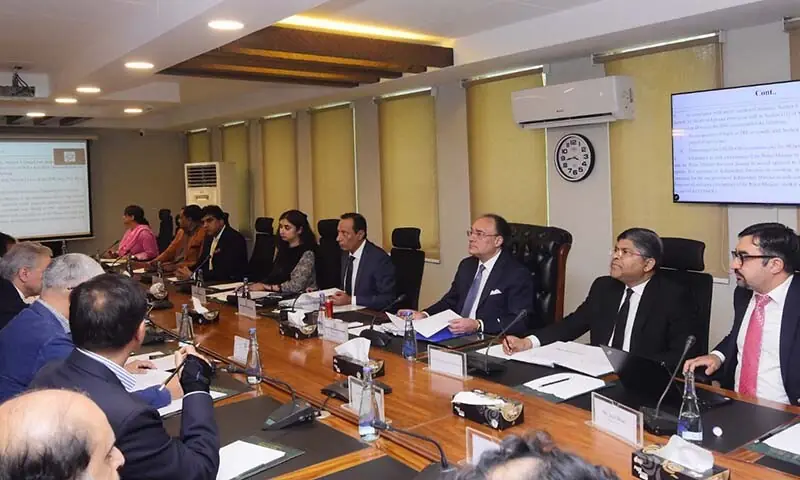
The Cabinet Committee on state-owned enterprises in Pakistan has rejected a request from two gas utilities, Sui Southern and Sui Northern, to be exempted from international accounting standards. These utilities are currently facing a significant circular debt crisis. The Petroleum Division had sought exemptions from IFRS-14 and IFRS-9, aiming to continue using older Generally Accepted Accounting Principles (GAAP) for their regulated business model. The committee, chaired by Finance Minister Muhammad Aurangzeb, instructed the Petroleum Division to hold further discussions with the Finance and Law and Justice Divisions and present a revised proposal. Sources indicate that the utilities had previously utilized a similar three-year exemption. The finance minister noted that such an exemption would conflict with the SOE Act 2023. The Central Monitoring Unit (CMU), which oversees state-owned enterprises under IMF requirements, strongly opposed the exemption, emphasizing the need for transparency in financial reporting. Applying IFRS-9 and IFRS-14 could have forced the utilities to account for unrecoverable liabilities, potentially eroding their equity despite sufficient cash flow for operations. The committee also rejected the appointment of two board members from the Petroleum Division to Pakistan Petroleum Limited and Sandak Metals Limited, citing governance concerns, but approved other nominations. Additionally, the committee approved the exclusion of the Small and Medium Enterprises Development Authority (SMEDA) from the list of SOEs due to its statutory and non-commercial nature.
The Pakistani government's decision to deny state-owned gas utilities an exemption from international accounting standards highlights a tension between maintaining financial transparency and managing the immediate pressures of significant circular debt. The rejection, particularly in light of the SOE Act 2023 and IMF monitoring, suggests a move towards greater fiscal discipline and adherence to global financial reporting norms. While the utilities sought to avoid potential insolvency declarations by continuing with older GAAP, the committee's stance prioritizes a more accurate reflection of financial health, as mandated by IFRS-9 and IFRS-14. This decision could necessitate difficult financial adjustments for the utilities, potentially impacting their equity and requiring robust strategies for circular debt resolution. The broader implication is a commitment to improved governance and accountability within state-owned enterprises, aligning with international best practices and potentially enhancing investor confidence in the long term, though short-term financial reporting challenges may persist.
AI-generated to prompt reflection — not editorial opinion, not advice, not a statement of fact. How this works.