Pakistan claims polio eradication within reach, citing progress but highlighting KP insecurity
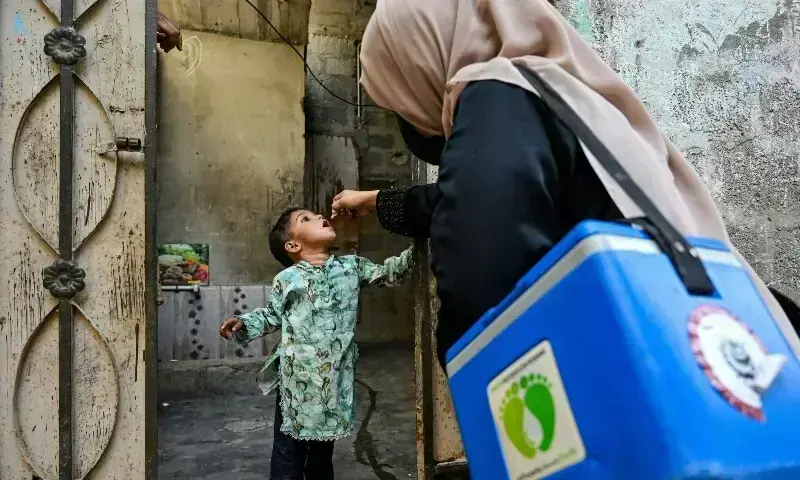
Pakistan has informed the Independent Monitoring Board (IMB) that it is in the final stages of eradicating polio, reporting a significant reduction in virus transmission. Officials presented data indicating a 99.8% decrease in polio cases since the early 1990s, with cases falling from 74 in 2024 to 31 in 2025, and only three reported in 2026 so far. The delegation, led by Minister of State for Health Dr. Malik Mukhtar Ahmad Bharath and including Prime Minister’s Focal Person for Polio Eradication Ayesha Raza Farooq, emphasized stronger political leadership, improved accountability, and data-driven strategies as key to this progress. They acknowledged that failure to eliminate the virus from remaining hotspots could jeopardize years of effort.
Despite these advancements, persistent insecurity in southern Khyber Pakhtunkhwa (KP) remains the primary obstacle to reaching all children. Farooq stated that the virus is now concentrated in these difficult and insecure areas, where security threats prevent vaccination teams from accessing thousands of children. Pakistan is adapting its strategy with smaller, more frequent local vaccination teams and integrating polio campaigns with routine health services. The IMB, an oversight body for the Global Polio Eradication Initiative, focuses on Pakistan and Afghanistan, the only two countries where wild poliovirus is still endemic. The IMB previously recommended travel restrictions for Pakistan in 2012, which were implemented in 2014, requiring polio vaccination for international travelers.
Pakistan's presentation to the IMB highlights the complex interplay between public health initiatives and geopolitical realities. While the reported decline in polio cases suggests progress in vaccination campaigns and governmental commitment, the persistent challenge of insecurity in Khyber Pakhtunkhwa underscores systemic vulnerabilities. The concentration of the virus in these difficult geographies indicates that traditional top-down strategies may be insufficient without addressing the root causes of instability and access barriers. Future eradication efforts will likely depend on innovative, localized approaches that integrate health services with community engagement and security considerations. The long-term success hinges on sustained political will and the ability to adapt to evolving challenges, particularly in regions affected by conflict, to ensure no child is left behind in the global push for polio eradication.
AI-generated to prompt reflection — not editorial opinion, not advice, not a statement of fact. How this works.