Pakistan Considers New Power Tariff Amidst Declining Demand and Regulator's Scrutiny
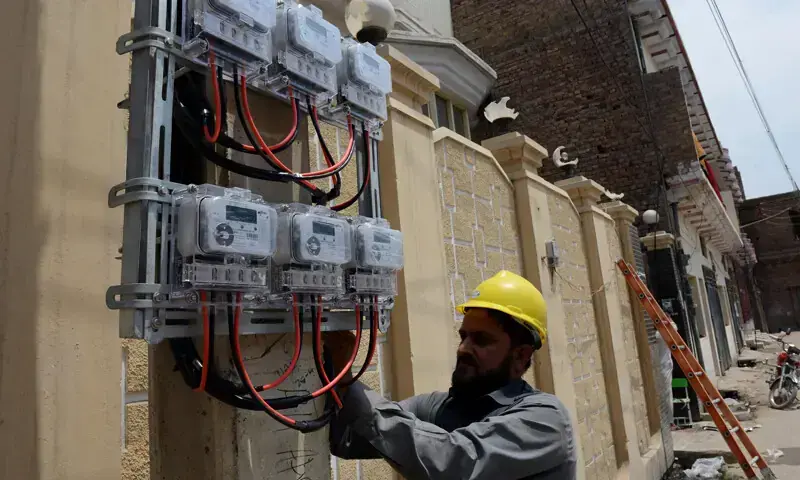
The Pakistani government is contemplating a new power tariff package, signaling potential additional fuel cost charges of approximately Rs1.20 per unit for consumers in their August bills. This move aims to recover Rs15.7 billion for electricity consumed in June, despite a notable decline in electricity demand by over three percent. The National Electric Power Regulatory Authority (Nepra) has raised concerns regarding the performance of power sector entities, particularly criticizing excessive and revenue-based loadshedding. Nepra also questioned the policy of implementing power outages while demand is falling and highlighted system constraints that limit the use of cheaper energy sources. Electricity consumption in June decreased by about 3.3% compared to the same month last year, with significant reductions observed in domestic, commercial, and agricultural sectors, though industrial consumption saw a slight increase. The higher fuel cost is attributed to the non-availability of contracted LNG from Qatar, leading to more expensive spot market purchases and some reliance on furnace oil. Nepra's Member Development, Maqsood Anwar Khan, expressed dismay over public protests against loadshedding while demand is reportedly down. Power companies acknowledged loadshedding occurred in June and that revenue-based loadshedding remained high. Factors contributing to the demand reduction include increased solar net metering, the transfer of agricultural tube wells to solar power, and weather patterns. The government is exploring tariff adjustments for time-of-use rates, captive power plants, and battery energy storage systems, with utility-scale battery storage potentially leading to slightly higher tariffs. Industrial representatives have called for a review of an incremental tariff package, which the government stated has benefited the industrial sector and is under review by Nepra. Nepra also criticized the reported drop in Disco inefficiency costs, suggesting it was achieved through loadshedding rather than improved governance or reduced illegal connections. Concerns were also raised about outages at three nuclear power plants, though officials stated their availability remained within contractual limits. The actual fuel cost for June exceeded the reference cost, necessitating the proposed increase.
The Pakistani government's proposal for a new power tariff package, coupled with declining electricity demand and regulatory scrutiny, highlights systemic challenges in the energy sector. The regulator's criticism of loadshedding amidst falling demand suggests a potential disconnect between energy generation, distribution efficiency, and consumer needs. Factors like increased solar adoption and grid inefficiencies point to evolving energy landscapes and the need for adaptive policy frameworks. The government's exploration of tariff adjustments for new technologies like battery storage indicates an awareness of future energy trends, but the fiscal implications of such systems require careful consideration to ensure equitable cost distribution. Addressing Disco inefficiencies through improved governance and infrastructure, rather than load management, remains a critical governance challenge for long-term sector stability and consumer welfare.
AI-generated to prompt reflection — not editorial opinion, not advice, not a statement of fact. How this works.