Pakistan Court Orders Nai Gaj Dam Completion Under Original Contract
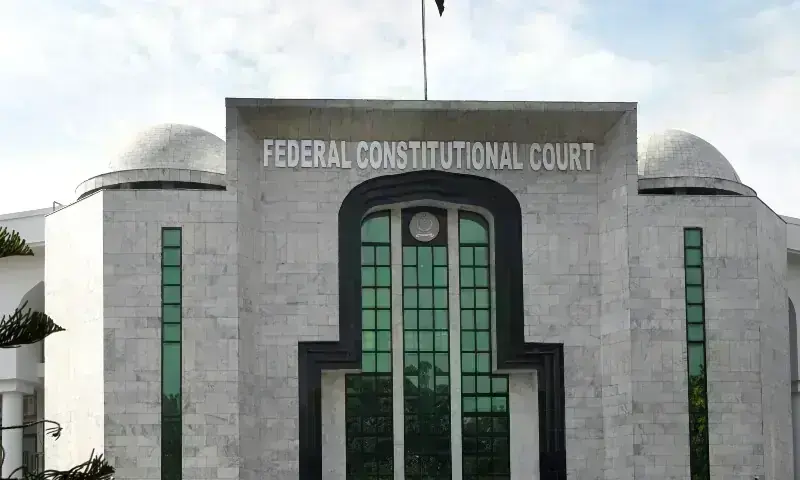
The Federal Constitutional Court (FCC) of Pakistan has overturned previous Sindh High Court orders concerning the delayed Nai Gaj Dam project. The FCC directed the contractor, NEIE SMADB-LILLEY-RMS Karachi, to finish the remaining work strictly according to the original contract, an arbitral award, and a September 21, 2021 memorandum of understanding (MoU). The Sindh High Court had previously permitted the contractor to seek price escalations beyond the agreed terms, which the FCC has now disallowed. A two-judge FCC bench, led by Chief Justice Aminuddin Khan, emphasized that all parties, including the contractor and Wapda, must fulfill their commitments. To prevent further delays, the court prohibited any judicial intervention until the dam's completion, except through the contract's dispute resolution mechanism. Wapda is instructed to review the contractor's request to resume work within 15 days, assessing remaining tasks and granting time extensions solely based on contractual provisions, without allowing for additional payment or financial benefits beyond what has already been finalized. If the contractor fails to agree to these terms or refuses to proceed, Wapda has the liberty to re-tender the remaining work on a risk-and-cost basis. The Nai Gaj Dam, located in Dadu district, is a crucial public infrastructure project aimed at providing irrigation to the Kachho and Kohistan plains, increasing water supply to Manchar lake, generating 4.2MW of hydroelectric power, and cultivating approximately 28,800 acres of land. It is also vital for the environmental recovery of Manchar lake, which has suffered ecological damage due to reduced freshwater flow. The project, initiated in 2012 with a contract value of Rs38.79 billion, has faced significant delays and issues, including irregularities in the contractor's performance guarantees. The FCC highlighted the dam's importance as a public project serving irrigation, environmental restoration, agricultural development, and water conservation.
The Federal Constitutional Court's intervention in the Nai Gaj Dam dispute underscores the critical tension between contractual finality and the public interest in completing vital infrastructure. By mandating adherence to the original contract and arbitral awards, the court aims to re-establish predictable governance frameworks for large-scale public projects, mitigating risks associated with scope creep and escalating costs that can derail national development objectives. This ruling emphasizes that while contractors play a crucial role, the ultimate accountability for project completion and adherence to public funds rests on robust contractual discipline and dispute resolution mechanisms. The FCC's approach seeks to balance the need for timely project execution with the imperative of fiscal responsibility, setting a precedent for future infrastructure endeavors by reinforcing the principle that public benefit must not be compromised by protracted disputes over financial claims beyond agreed terms. This judicial stance may encourage more rigorous due diligence and risk management from all parties involved in future public works.
AI-generated to prompt reflection — not editorial opinion, not advice, not a statement of fact. How this works.