Pakistan Court Overturns Order to Demolish Restaurants in National Park
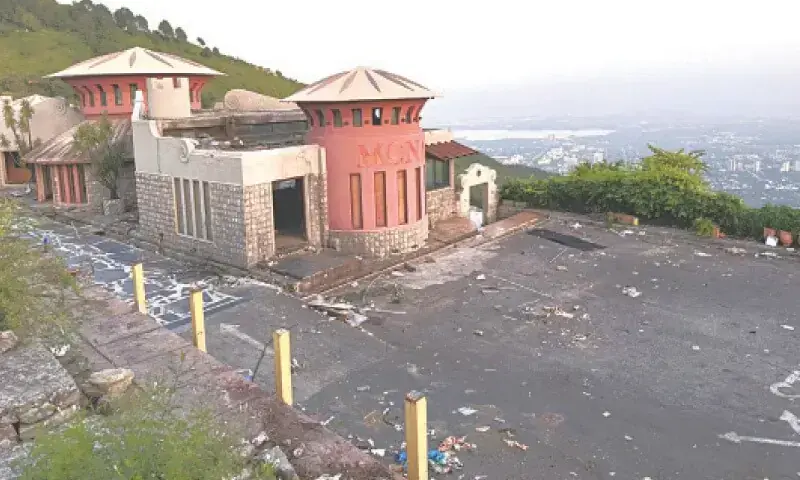
The Federal Constitutional Court (FCC) in Pakistan has overturned a Supreme Court (SC) judgment from August 2024 that had ordered the demolition of restaurants, including Monal Group, La Montana, and Gloria Jeans, located within the Margalla Hills National Park (MHNP). The SC had initially mandated the closure and subsequent demolition of these establishments to protect the park's biodiversity, with the restaurants being closed in September 2024. Review petitions were filed by the Capital Development Authority (CDA) and the Metropolitan Corporation Islamabad (MCI), challenging the SC's directive for the Islamabad Wildlife Management Board (IWMB) to take possession of the restaurants. The FCC ruled that ownership disputes should be handled by trial courts, while administrative matters fall under the purview of relevant regulatory bodies. The court emphasized that legal decisions should be based on law, not emotions, and that extraneous considerations should be disregarded. Earlier, the SC had dismissed similar review petitions, declaring Monal Group's owner, Luqman Ali Afzal, a trespasser and stating that the restaurant operations disregarded environmental protection laws. The SC had previously noted that the restaurant operators and authorities had damaged the park's trees and flora, disturbed wildlife, and adversely affected its ecological functions, warning of significant environmental costs for current and future generations.
The Federal Constitutional Court's decision to set aside the Supreme Court's demolition order for restaurants in Margalla Hills National Park highlights a complex interplay between development, environmental protection, and legal jurisdiction. By deferring ownership disputes to trial courts and administrative matters to regulatory bodies, the FCC shifts the immediate focus from demolition to due process and established legal frameworks. This approach acknowledges the potential for legitimate property claims while still recognizing the need for proper governance of protected areas. The ruling prompts reflection on the long-term sustainability of commercial activities within national parks and the effectiveness of regulatory oversight in preventing environmental degradation. Future challenges will likely involve balancing economic interests with the imperative to preserve biodiversity and ecological functions, particularly in the face of evolving urban pressures and climate change impacts.
AI-generated to prompt reflection — not editorial opinion, not advice, not a statement of fact. How this works.