Pakistan Court Upholds Order on 'Imran Khan Release Force' Case
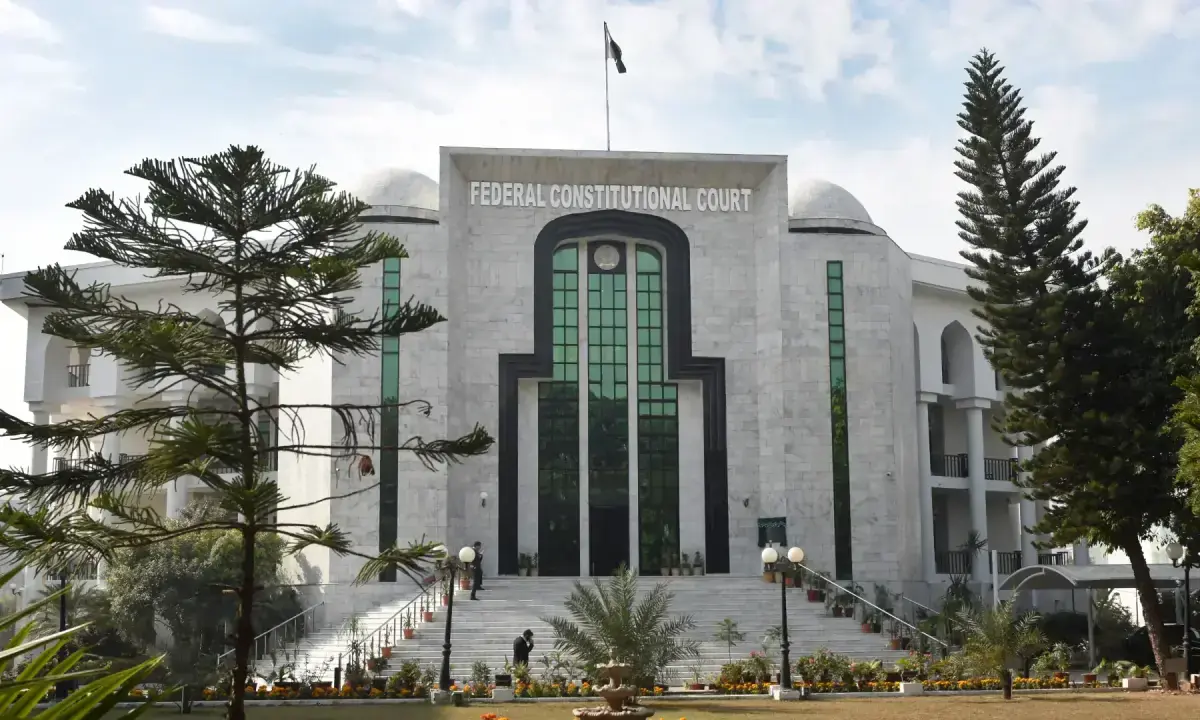
The Federal Constitutional Court (FCC) in Pakistan has affirmed that its earlier directive concerning the alleged formation of an 'Imran Khan Release Force' remains in effect. This ruling came during a hearing where the petitioner's counsel requested an extension of the order, citing fears of a potential law and order situation. Chief Justice Aminuddin Khan clarified that the court's previous cautions were not limited to the specific hearing date but were ongoing. The case involves a petition filed by Malik Zaheer Ahmed, who argues that the creation of a force to secure the release of PTI founder Imran Khan contravenes the Constitution and threatens public order. Lawyers for PTI leaders sought additional time to file a response, describing the petition as politically motivated. The court granted this request and postponed further proceedings until after the summer recess. In a related development, the Chief Minister of Khyber Pakhtunkhwa submitted a reply denying the existence of any armed or paramilitary structure, characterizing the 'Imran Khan Rehayi Aman Movement' as a peaceful civic initiative. Separately, the FCC directed respondents to file replies within two weeks in a case concerning the May 10, 2023, attack on Radio Pakistan Peshawar, in which the KP Chief Minister is an accused. The court also extended a stay on the trial proceedings, which was granted following a petition by the Pakistan Broadcasting Corporation seeking the case's transfer due to alleged political interference.
This legal proceeding highlights the tension between political mobilization and constitutional order in Pakistan. The court's decision to maintain its earlier order underscores a judicial concern regarding potential extralegal actions in pursuit of political objectives. The defense's characterization of the petition as politically motivated suggests a broader context of partisan conflict influencing legal challenges. The separate but concurrent handling of the Radio Pakistan attack case, also involving the KP Chief Minister, indicates a pattern of legal scrutiny across multiple fronts. The FCC's role appears to be one of maintaining judicial oversight and ensuring adherence to constitutional frameworks amidst politically charged circumstances, prompting reflection on the boundaries of civic action and the state's responsibility for maintaining public order and ensuring fair legal processes.
AI-generated to prompt reflection — not editorial opinion, not advice, not a statement of fact. How this works.