Pakistan Expresses Disappointment with EU Report on GSP+ Compliance
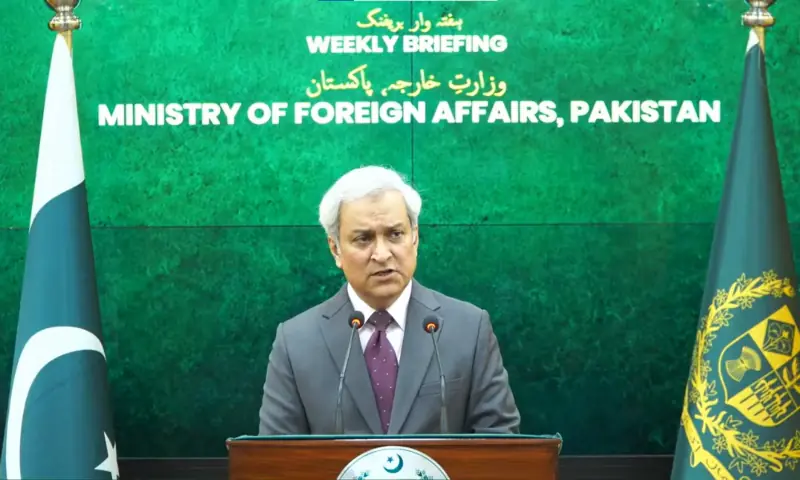
Pakistan has voiced "disappointment" regarding a recent European Union (EU) report that identified shortcomings in the country's adherence to its Generalised Scheme of Preferences Plus (GSP+) commitments. The report, part of the European Commission's global GSP assessment for 2023-2025, stated that Pakistan had "regressed in a number of areas while positive change was limited." Foreign Office spokesperson Tahir Andrabi acknowledged the report's recognition of Pakistan's legislative progress and ongoing compliance with the 27 international conventions required for GSP+ status. However, he criticized the report's "overall narrative" for not presenting a sufficiently balanced view of Pakistan's performance. Andrabi argued that the EU report "understates the breadth of reforms undertaken since Pakistan joined GSP+ in 2014" and placed "disproportionate emphasis on the lower-than-desired progress in a few areas." Despite these concerns, the spokesperson reaffirmed that the GSP+ remains crucial for Pakistan's economic ties with the EU, supporting exports, employment, women's economic participation, poverty reduction, and overall economic development, characterizing it as a "mutually beneficial arrangement." Pakistan intends to maintain constructive engagement with the European Commission and other EU institutions, remaining committed to the effective implementation of the GSP framework's underpinning international conventions. The FO also noted that Pakistan's cooperation with the EU extends beyond GSP+ to areas like development, migration, counterterrorism, regional stability, and climate resilience.
Pakistan's reaction to the EU's GSP+ compliance report highlights a common tension between national reform narratives and external assessments. The EU's evaluation, suggesting regression in certain areas, may reflect differing interpretations of progress or the prioritization of specific indicators. Pakistan's emphasis on legislative achievements and the "breadth of reforms" suggests a focus on systemic changes, while the EU's assessment might be more sensitive to the tangible impact and depth of implementation on the ground. This divergence underscores the complexities of multilateral trade agreements, where adherence to international conventions requires continuous, demonstrable progress across multiple dimensions. Future engagement will likely involve detailed dialogues to reconcile these differing perspectives, aiming to ensure that the GSP+ framework effectively drives sustainable development and upholds international standards, balancing economic incentives with robust governance and human rights considerations.
AI-generated to prompt reflection — not editorial opinion, not advice, not a statement of fact. How this works.