Pakistan Faces National Emergency as Monsoon Rains Cause Widespread Flooding
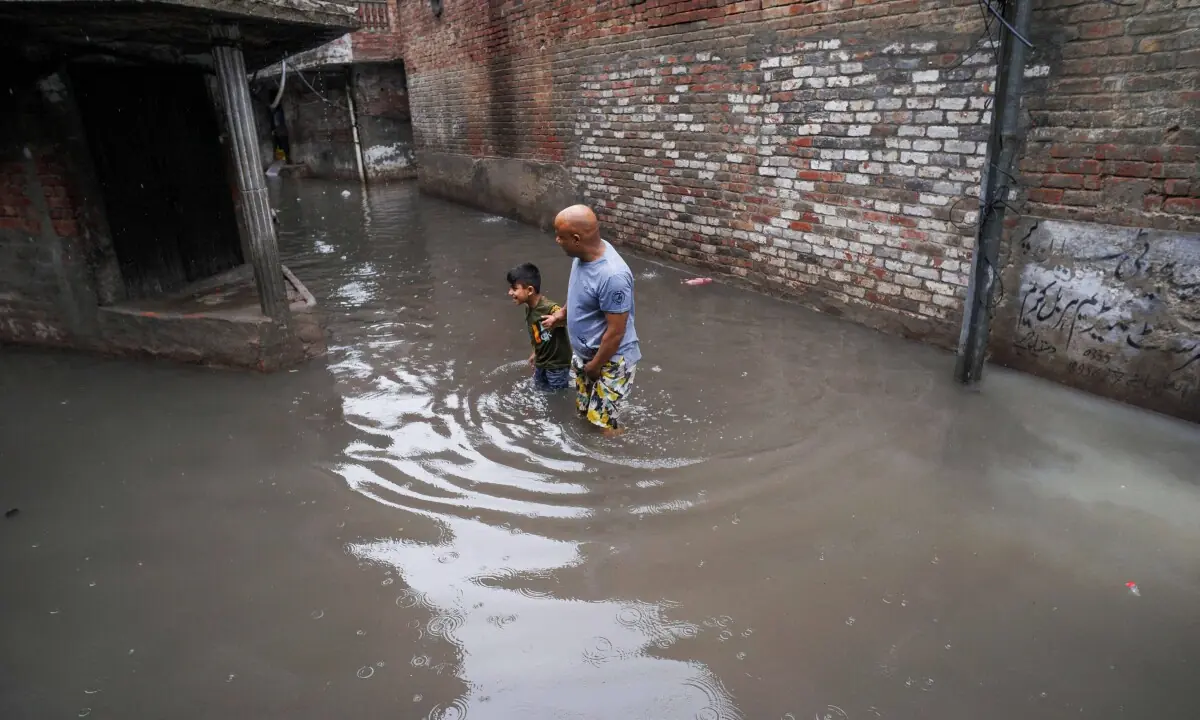
Pakistan is currently grappling with a nationwide emergency due to heavy monsoon rains that began on June 26, resulting in approximately 100 deaths so far. The Meteorological Office has predicted widespread rain and thunderstorms until July 28, with the National Disaster Management Authority issuing warnings about rising river levels, flash floods, urban flooding, and landslides across many regions. The impact is felt from Gilgit-Baltistan, where glacial lake outburst floods have damaged roads and disrupted electricity, to Punjab's cities, which are experiencing extensive flooding and swollen rivers. Lahore has recorded its highest rainfall of the season, while Gujranwala and Sialkot have seen significant inundation, leading to widespread damage to roads, homes, crops, livestock, and public infrastructure. This recurring crisis highlights persistent weaknesses in climate adaptation, including clogged drains, illegal construction on waterways, fragile infrastructure, and delayed relief efforts, despite official claims of improved drainage. While climate change exacerbates extreme weather, governance failures amplify its human cost, necessitating a shift from reactive measures to resilient infrastructure, robust planning, and accountable institutions. The immediate priority is to prevent further loss of life by pre-positioning rescue resources, ensuring timely warnings reach vulnerable communities in local languages, and restoring access to isolated areas. Long-term solutions involve publishing flood-risk maps, enforcing construction bans in vulnerable zones, enhancing glacial monitoring, and conducting independent audits of preparedness measures, transforming predictable hazards into managed risks.
The recurring monsoon flooding in Pakistan underscores a critical governance challenge: the persistent gap between declared preparedness and demonstrated resilience. While climate change undeniably intensifies extreme weather events, the scale of human and economic cost appears magnified by systemic weaknesses in infrastructure, urban planning, and institutional response mechanisms. The source highlights that despite lessons from the devastating 2022 floods, issues like encroachments on waterways and delayed relief persist, suggesting that adaptation strategies may not be fully integrated into long-term development and governance frameworks. Moving forward, a focus on robust, independently audited infrastructure development, strict enforcement of land-use regulations in flood-prone areas, and enhanced community-level early warning systems, tailored to local languages, will be crucial. This approach shifts the paradigm from reactive disaster management to proactive climate adaptation, aiming to mitigate the impact of inevitable weather events rather than treating them as unforeseen crises each year.
AI-generated to prompt reflection — not editorial opinion, not advice, not a statement of fact. How this works.