Pakistan Finance Minister Discusses Economic Progress and Reforms with IMF Officials
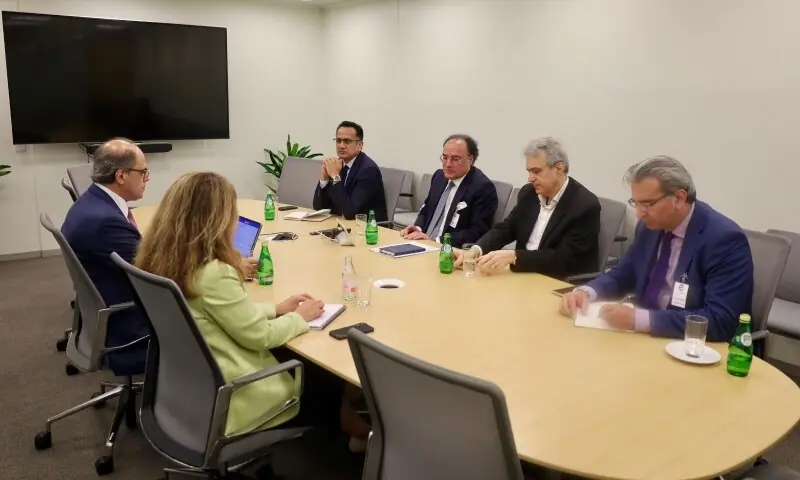
Pakistan's Finance Minister, Muhammad Aurangzeb, met with senior officials from the International Monetary Fund (IMF) in Washington, D.C., on July 22, 2026, to review the nation's macroeconomic performance and ongoing reform program. The discussions focused on progress under the Extended Fund Facility (EFF) and the Resilience and Sustainability Facility (RSF), as well as broader IMF-supported reforms. Minister Aurangzeb highlighted improvements in fiscal and external balances, revenue collection, foreign exchange reserves, remittances, and the current account. Key reform areas discussed included taxation, energy, privatization, tariff rationalization, and debt management, alongside efforts to diversify financing sources and re-enter international capital markets. The meetings also touched upon human capital development, women's economic participation, demographic challenges, technology-driven growth, and export-oriented development strategies. Minister Aurangzeb expressed gratitude for the IMF's recognition of Pakistan's reform commitment and ownership, reaffirming the government's dedication to fiscal discipline and structural transformation. Separately, the minister met with the President of the US Export-Import Bank, John Jovanovic, to explore expanding economic and commercial cooperation, focusing on project financing, agricultural trade, and hydrocarbons. Both sides agreed to identify priority projects and establish a framework for US financing and technology transfer, with a strategic framework expected to be finalized by September 2026. Earlier, Aurangzeb requested a $10 billion Exchange Stabilization Support Facility from US Treasury Secretary Scott Bessent and discussed modernizing Pakistan's refinery sector with Honeywell Technologies. This visit occurs amid ongoing negotiations regarding US tariffs on Pakistani exports, which were initially set at 29% in April 2025 and subsequently reduced to 19% following a Pakistani delegation's visit in July 2025.
The Pakistani finance minister's engagements with the IMF and US financial institutions underscore the nation's ongoing efforts to stabilize its economy and secure international financial support. These discussions highlight a strategic focus on structural reforms, fiscal discipline, and attracting foreign investment, which are critical for long-term economic resilience. The emphasis on diversification of financing sources and re-entry into capital markets suggests a proactive approach to managing sovereign debt and funding development. Simultaneously, the dialogues on trade, including tariff negotiations with the US, reveal the complex interplay between domestic economic policy and global trade dynamics. The government's commitment to reforms, as communicated to the IMF, aims to build investor confidence and unlock potential for growth, though the success of these initiatives will depend on consistent implementation and navigating external economic pressures over the next decade.
AI-generated to prompt reflection — not editorial opinion, not advice, not a statement of fact. How this works.