Pakistan FM Urges De-escalation in Middle East Amid Renewed US-Iran Hostilities
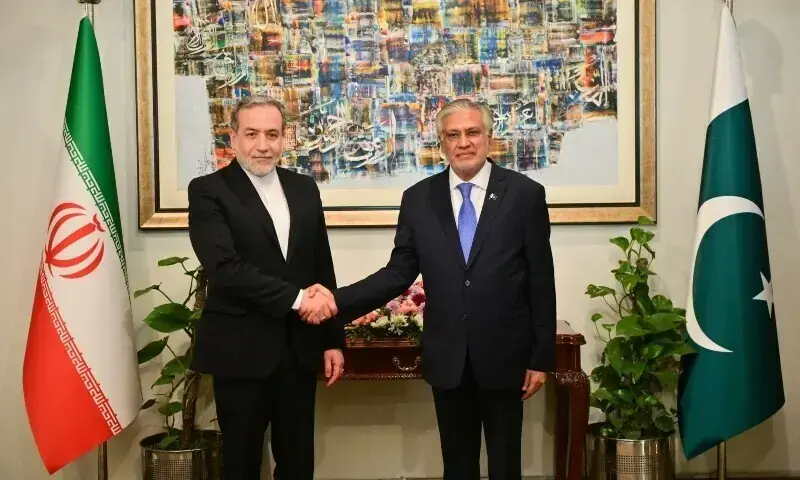
Pakistan's Deputy Prime Minister and Foreign Minister Ishaq Dar spoke by phone with Iranian Foreign Minister Abbas Araghchi on Sunday to urge restraint and de-escalation amid escalating tensions in the Middle East. The call followed a new wave of US attacks on Iran and retaliatory strikes by Tehran on US assets. Both ministers discussed the evolving regional situation, with Dar emphasizing the importance of de-escalation and restraint as outlined in the Islamabad MoU signed on June 18, 2026. This 14-point interim peace deal, aimed at ending the war between the US and Iran, also includes Pakistan as a mediator. Pakistan has been involved in peace efforts since late February when the US and Israel initiated attacks on Iran, leading to a war and a global fuel crisis due to Tehran's disruption of traffic in the Strait of Hormuz. Despite initial hopes raised by the MoU, recent attacks have led US President Donald Trump to declare the ceasefire over. The situation remained tense as the US conducted new strikes on Iran, while Tehran closed the Strait of Hormuz again and attacked US facilities in Jordan, Kuwait, Oman, and Qatar. Dar stressed that dialogue and diplomacy are the only effective means to resolve disputes and achieve lasting regional peace, reiterating Pakistan's commitment to playing a constructive role in maintaining stability. The two foreign ministers agreed to maintain close communication.
The renewed US-Iran hostilities, occurring despite a signed peace memorandum, highlight the persistent challenges in de-escalating entrenched geopolitical conflicts. The involvement of multiple regional actors and vital global trade routes like the Strait of Hormuz underscores the systemic fragility of international stability when major powers engage in direct confrontation. Pakistan's mediation efforts, while commendable, face the inherent difficulty of bridging divides between parties with fundamentally opposing strategic interests. Future diplomatic frameworks may need to incorporate more robust enforcement mechanisms and address the underlying economic and security incentives that drive such escalations, particularly in the context of global energy markets and technological advancements in military capabilities.
AI-generated to prompt reflection — not editorial opinion, not advice, not a statement of fact. How this works.