Pakistan Issues Glacial Flood Alert Amidst Widespread Road Closures in Gilgit-Baltistan
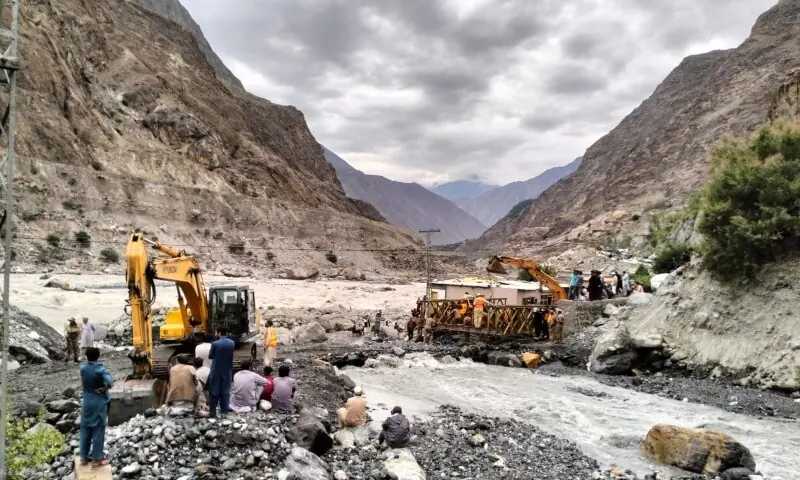
The Pakistan Meteorological Department (PMD) has issued a Glacial Lake Outburst Flood (Glof) alert for the Gilgit-Baltistan (GB) and Khyber Pakhtunkhwa (KP) regions, effective for the first week of August. This warning comes as flash floods and Glofs have cut off road access to several areas in GB for five consecutive days, stranding commuters. The PMD attributes the increased risk to a combination of a warm thermal regime and ongoing precipitation, which is accelerating snow and ice melt in the glaciated valleys. This meltwater is expected to raise water levels in rivers, expand existing glacial lakes, and form new ones, posing a significant risk of sudden high flows to downstream and low-lying areas. The rapid expansion of these lakes can destabilize their natural dams, potentially triggering Glof incidents, which can cause loss of life, property, and livelihoods. Approximately 7.1 million people in GB and KP are considered vulnerable to this phenomenon. Experts note that many of Pakistan's glaciers, particularly in Chitral and GB, are receding due to climate change-induced temperature rise. The PMD also warned of permafrost thawing and excess surface water increasing the likelihood of landslides and debris flows in steep terrains. Residents in affected areas are advised to stay away from riverbanks, stream beds, and narrow valleys, and to monitor water bodies for changes. Disaster management authorities are urged to maintain 24/7 alertness and coordinate with community-based disaster risk management committees. Meanwhile, GB authorities are working to restore traffic on the Baltistan Highway by installing an iron bridge, as recent floods have damaged infrastructure, including a crucial bridge that disconnected four districts of Baltistan. The region has experienced 89 flash flood and Glof events this monsoon, resulting in destroyed houses, damaged infrastructure, internally displaced persons, and livestock loss. Restoration efforts are ongoing, with multiple agencies involved in clearing blocked roads and providing aid to stranded passengers.
The PMD's Glof alert highlights the escalating vulnerability of Pakistan's northern regions to climate change impacts, particularly accelerated glacial melt. The recurring infrastructure damage and displacement underscore systemic challenges in adapting to these environmental shifts. While immediate response efforts focus on restoring connectivity and providing relief, a long-term strategy is needed to address the root causes and build resilience in communities situated in high-risk zones. This involves integrating climate adaptation into regional development planning, potentially re-evaluating land use in vulnerable areas, and investing in advanced early warning systems that can mitigate the impact of sudden flood events. The situation also points to the broader global challenge of managing shared water resources and the equitable distribution of adaptation funding in the face of increasing climate-related disasters.
AI-generated to prompt reflection — not editorial opinion, not advice, not a statement of fact. How this works.