Pakistan mandates battery storage for upcoming 800MW power auction
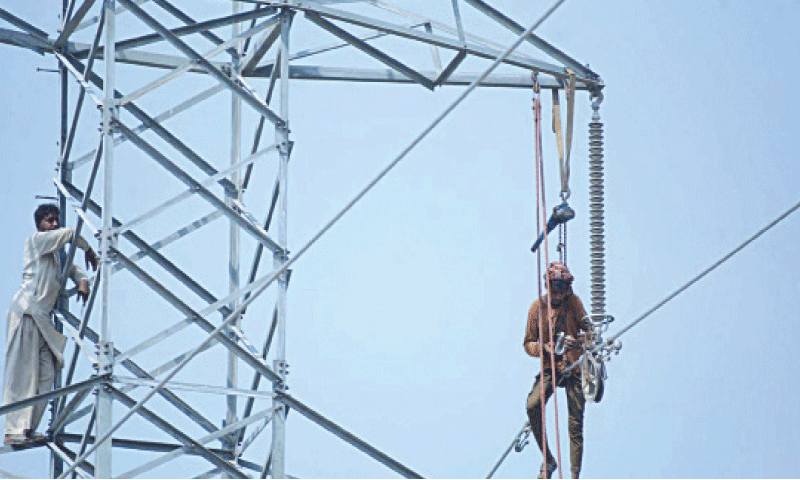
Pakistan's government has decided to make Battery Energy Storage Systems (BESS) a mandatory component for an upcoming auction of 800MW of surplus power capacity. This move aims to address significant "duck-curve" challenges and stabilize electricity supply, particularly with the increasing integration of renewable energy sources like solar power.
The Independent System and Market Operator (ISMO), under the power division, has proposed this change as part of a revised Wheeling Auction Process. Auction participants will be required to include BESS with a minimum of 10% firm capacity alongside their solar or wind generation technologies. ISMO stated that this requirement will not only mitigate grid issues such as curtailment but also enhance the financial returns for auction participants.
Stakeholders have generally supported the mandatory BESS requirement, with ISMO's modeling indicating favorable financial returns that increase with higher BESS capacity. This approach aligns with practices in developing markets like India, the Philippines, China, and the Dominican Republic, which have implemented similar mandatory BESS integration. Two other proposed amendments include granting ISMO the flexibility to extend proposal submission deadlines by approximately one month and establishing a Grievance Redressal Committee to handle bidder complaints, addressing requests from prospective participants.
The Pakistani government's decision to mandate Battery Energy Storage Systems (BESS) in power auctions reflects a strategic response to the inherent intermittency of renewable energy sources and the resulting grid instability, commonly known as the "duck curve." By requiring a minimum BESS capacity, the government incentivizes private sector investment in grid stabilization technologies, aiming to create a more resilient and efficient energy market. This policy could foster innovation in energy storage solutions and potentially reduce reliance on fossil fuels for peak load management. However, the long-term success will depend on the regulatory framework's ability to ensure fair competition, manage costs effectively, and adapt to evolving technological advancements in the energy sector over the next decade.
AI-generated to prompt reflection — not editorial opinion, not advice, not a statement of fact. How this works.