Pakistan Military Honors Captain Karnal Sher Khan on 27th Martyrdom Anniversary
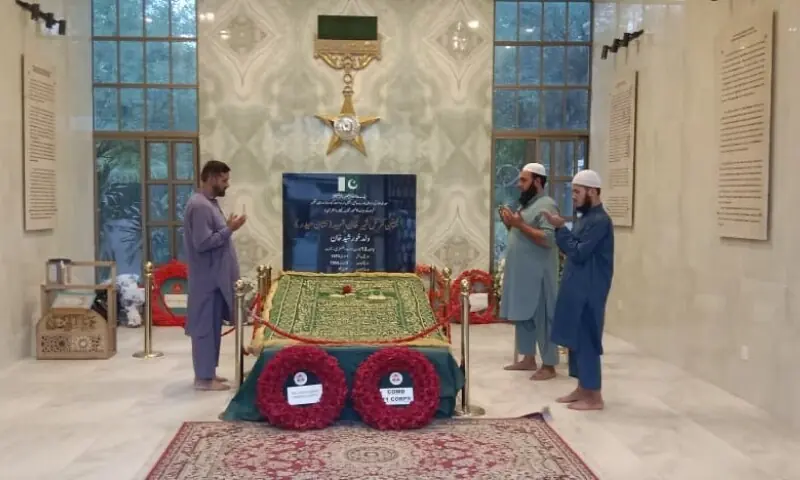
Pakistan's armed forces leadership, including Chief of Defence Forces and Chief of Army Staff Field Marshal Asim Munir, Chief of Naval Staff Admiral Naveed Ashraf, and Air Chief Marshal Zaheer Ahmed Baber Sidhu, paid homage to Captain Karnal Sher Khan Shaheed on the 27th anniversary of his martyrdom. Khan was martyred on July 5, 1999, while fighting Indian forces in the Kargil conflict. The Inter-Service Public Relations (ISPR) highlighted Khan's "unmatched courage, unwavering devotion, and supreme sacrifice" in defending the nation, noting his "extraordinary gallantry and resolute leadership" at an altitude of 17,000 feet in the Gultary sector. His sacrifice is described as a "timeless beacon of courage, patriotism, and steadfast commitment to the sovereignty and territorial integrity of Pakistan," inspiring generations. The anniversary was also observed in Swabi, where locals visited his tomb. A Pakistan Army ceremony at his mausoleum included Inspector General Frontier Corps Khyber Pakhtunkhwa North Major General Rao Imran Sarta, who laid a floral wreath. Khan, born on January 1, 1970, fought valiantly, inflicting losses on Indian forces before his death. His family expressed immense pride in his sacrifice for the country, with his father reportedly stating readiness for further sacrifices.
The commemoration of Captain Karnal Sher Khan's martyrdom underscores the enduring narrative of national sacrifice within Pakistan's military and public consciousness. Such events serve to reinforce military values and national identity, particularly in the context of historical conflicts. The emphasis on courage, devotion, and sacrifice aims to foster patriotism and loyalty among both service members and civilians. Examining this through a future-oriented lens, the consistent valorization of military sacrifice in national narratives, while potent for morale, may present a challenge in promoting broader societal dialogues on conflict resolution and de-escalation. The long-term societal impact of such deeply ingrained martial traditions warrants consideration as geopolitical landscapes evolve.
AI-generated to prompt reflection — not editorial opinion, not advice, not a statement of fact. How this works.