Pakistan minister calls JUI-F chief's remarks on martyrs 'inappropriate' but unintentional
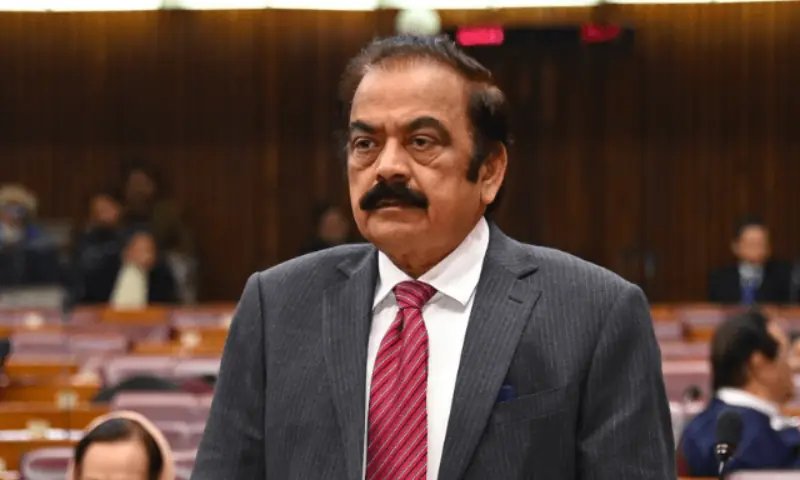
Rana Sanaullah, an adviser to Pakistan's Prime Minister and a leader of the PML-N party, stated on Friday that Maulana Fazlur Rehman's recent comments regarding army martyrs were "inappropriate" but likely not intended to be offensive. Sanaullah emphasized that Fazlur Rehman typically speaks carefully and that his words about the martyrs were unacceptable. He suggested that an apology from Fazlur Rehman would be a statesmanlike move, though he noted the JUI-F chief had adopted a different stance. Sanaullah also deemed a planned JUI-F protest outside the General Headquarters (GHQ) in Rawalpindi as "inappropriate" and a potential attack on Pakistan's defense. He refuted claims of a propaganda campaign against Fazlur Rehman, asserting that the remarks were damaging enough to cause demotivation among soldiers who sacrifice their lives without solely being motivated by salary. Sanaullah endorsed the public and political reactions to the comments, believing they were necessary to restore trust among martyrs' families. Meanwhile, Maulana Attaur Rehman, the JUI-F chief in Khyber Pakhtunkhwa, claimed that a small excerpt of Fazlur Rehman's speech was taken out of context by media outlets unhappy with the party's recent public meeting. He argued that an "outcry" was manufactured over the comments, which he stated were not initially reported on July 12 but became a major issue by July 13. Attaur Rehman asserted that the campaign aimed to diminish Fazlur Rehman's political influence and that the JUI-F chief had been personally targeted multiple times. He affirmed the JUI-F's support for the state and democracy, citing the party's historical contributions and sacrifices, including 83 workers killed in Bajaur. The KP JUI-F leader challenged authorities to file a case against Fazlur Rehman if they dared and reiterated readiness to march on Islamabad if ordered by the leadership.
The controversy surrounding Maulana Fazlur Rehman's remarks highlights the delicate balance between political dissent, national security narratives, and the public perception of military sacrifice in Pakistan. The differing interpretations—one suggesting unintentional "inappropriateness" and the other alleging a manufactured media campaign to discredit a political figure—reveal a deep-seated tension between state institutions and certain political-religious factions. From a systemic perspective, the incident underscores the challenges of maintaining public trust and national cohesion when sensitive symbols like military martyrs become entangled in political discourse. Future governance models may need to incorporate more robust mechanisms for mediating such conflicts, ensuring that criticism, even if sharp, does not undermine the morale of security forces or exploit societal divisions for political gain. The emphasis on "motivation" versus "salary" in military service also points to broader societal values and the psychological underpinnings of national defense, suggesting that efforts to bolster security should be complemented by initiatives that reinforce civic pride and shared national purpose.
AI-generated to prompt reflection — not editorial opinion, not advice, not a statement of fact. How this works.