Pakistan Navy Rescues 19 Crew From Stranded Fishing Vessel Near Gwadar
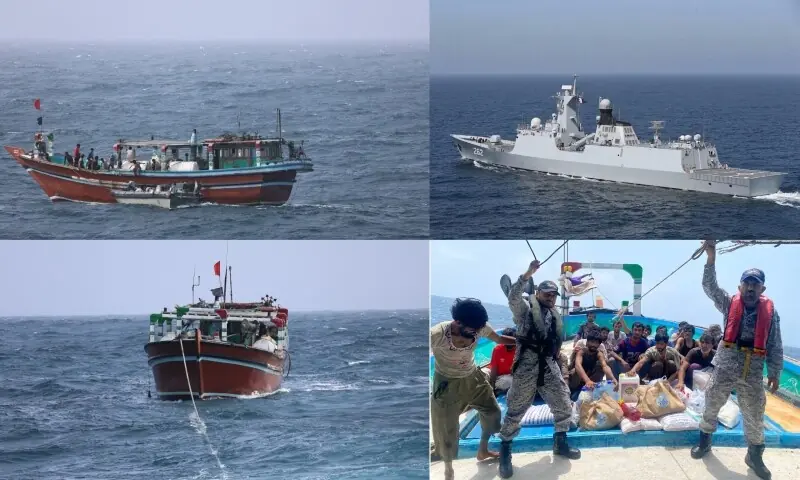
The Pakistan Navy announced on Thursday the successful rescue of 19 crew members from the fishing vessel Al Jalali, which became stranded approximately 120 nautical miles south of Gwadar due to engine failure. The crew comprised 11 Pakistani and 8 Iranian nationals. Their situation was perilous due to deteriorating weather conditions in the North Arabian Sea during the monsoon season, which posed an immediate threat to their lives. The Joint Maritime Information Coordination Centre received the distress call and promptly initiated a coordinated search and rescue operation with the Pakistan Navy. PNS Taimur was dispatched to the location to provide assistance. The swift response ensured the crew received essential supplies, including food, drinking water, and medical care at sea. The stranded vessel was subsequently towed safely towards the shore. President Asif Ali Zardari commended the Pakistan Navy for their professional skills and humanitarian efforts in rescuing both Pakistani and Iranian fishermen, highlighting their commitment to national and international responsibilities. This follows another successful rescue operation earlier this month where the Pakistan Navy and Pakistan Maritime Security Agency saved 20 crew members from a sinking cargo dhow.
This event highlights the critical role of maritime safety and rescue operations in international waters, particularly given the environmental challenges of the monsoon season in the North Arabian Sea. The successful rescue underscores the operational readiness and inter-agency coordination capabilities of the Pakistan Navy and its associated maritime bodies. From a systemic perspective, such incidents emphasize the ongoing need for robust search and rescue infrastructure and international cooperation to ensure the safety of seafarers, especially those engaged in fishing, which often involves operating in challenging conditions. The engagement of multiple nationalities among the rescued crew also points to the interconnectedness of maritime activities and the shared responsibility for maritime safety across borders. Future considerations may include enhanced early warning systems for engine failures and adverse weather, as well as preventative maintenance support for fishing fleets operating in vulnerable regions.
AI-generated to prompt reflection — not editorial opinion, not advice, not a statement of fact. How this works.