Pakistan Offers Full Cooperation to Iran, Discusses Security and Regional Peace
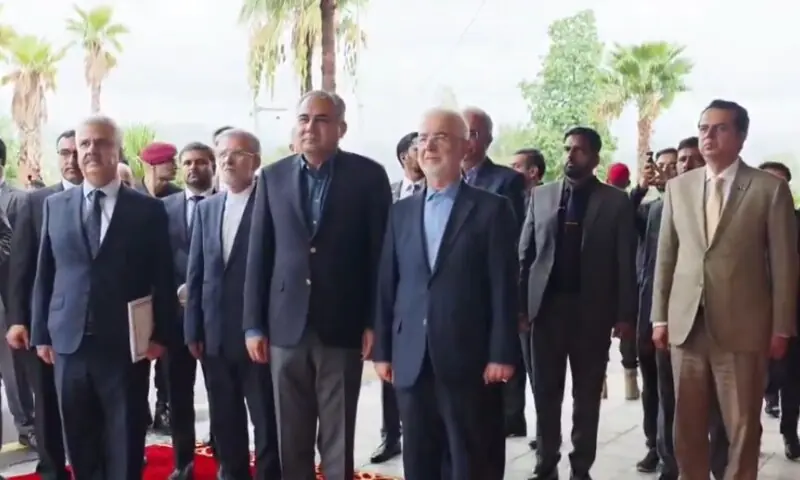
Pakistan's Interior Minister Mohsin Naqvi has stated that Pakistan is prepared to expand cooperation with Iran across all sectors. This commitment was made during a meeting with Iranian Interior Minister Eskandar Momeni, who is on an official visit to Pakistan. The ministers engaged in one-on-one and delegation-level discussions, reviewing bilateral relations, trade, regional developments, and potential areas for collaboration. Both sides agreed to bolster cooperation in counter-terrorism, counter-narcotics, and the prevention of illegal immigration and human trafficking. They also emphasized joint efforts to combat drug smuggling and terrorism, particularly those originating from the Afghan border, and committed to improving institutional coordination. Minister Naqvi praised Iranian officials for their peace efforts and expressed hope for imminent positive developments. During his visit, Momeni also met with Pakistan's Chief of Defence Forces and Chief of Army Staff, Field Marshal Syed Asim Munir, to discuss mutual interests, regional security, and border management. Additionally, Momeni met with Prime Minister Shehbaz Sharif, who expressed Pakistan's readiness to act as a mediator for regional peace amidst Middle East tensions. Momeni's visit coincides with Pakistan's diplomatic efforts to support an Islamabad Memorandum of Understanding aimed at resolving recent conflicts between the US and Iran.
This high-level engagement between Pakistan and Iran underscores a shared strategic interest in regional stability, particularly concerning border security and counter-terrorism efforts. The emphasis on joint action against drug smuggling and illegal immigration, especially those linked to the Afghan border, highlights the complex security challenges facing both nations. Pakistan's reiterated role as a mediator in regional conflicts, including the recent US-Iran tensions, positions it as a key diplomatic player. The discussions also reflect an alignment of interests in managing cross-border threats, suggesting a pragmatic approach to bilateral relations focused on mutual security concerns. Looking ahead, sustained cooperation in these areas could influence regional dynamics, but the effectiveness will depend on the consistent implementation of agreed-upon strategies and the broader geopolitical context.
AI-generated to prompt reflection — not editorial opinion, not advice, not a statement of fact. How this works.