Pakistan PM Orders Elimination of Redundant Government Positions for Efficiency
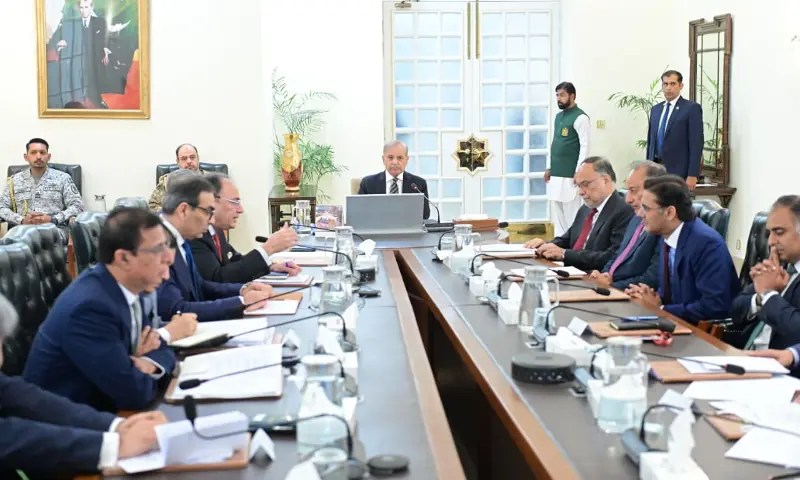
Prime Minister Shehbaz Sharif has ordered the elimination of unnecessary posts and positions within government departments to enhance public sector performance. During a review meeting on the federal government's right-sizing initiatives, the Prime Minister's Office (PMO) stated that modern technology and improved training should be leveraged to boost institutional efficiency. The Utility Stores Corporation, Pakistan Public Works Department, and Pakistan Agriculture Storage and Services Corporation have already been closed as part of these efforts, leading to savings for the national exchequer. PM Shehbaz emphasized that abolishing redundant roles is a key part of the government's reform agenda and urged for accelerated implementation of right-sizing measures. A third-party audit of abolished posts and institutions was directed, with the Right-Sizing Committee tasked to finalize remaining recommendations within one month. The meeting also noted that right-sizing has reduced the federal civilian government's expenditure-to-GDP ratio, and vacant posts have been eliminated. Proposals for right-sizing State-Owned Enterprises (SOEs) and autonomous bodies are underway, and steps are being taken for the privatization of several SOEs, following the privatization of Pakistan International Airlines (PIA) and First Women Bank Limited.
The Pakistani government's initiative to eliminate redundant positions and right-size state institutions reflects a common strategy aimed at improving fiscal efficiency and public sector performance. This approach seeks to reduce operational costs and potentially reallocate resources more effectively. However, the success of such measures often depends on careful implementation, ensuring that essential functions are not compromised and that the process of abolishing positions is transparent and equitable. The long-term impact will hinge on whether these reforms lead to sustained improvements in service delivery and economic outcomes, rather than merely short-term cost savings. Future considerations may include the integration of digital governance tools and the potential for retraining or redeploying affected personnel to enhance overall public sector capacity in the evolving technological landscape.
AI-generated to prompt reflection — not editorial opinion, not advice, not a statement of fact. How this works.