Pakistan PM Shehbaz Sharif Condemns Houthi Red Sea Attacks in Call with Saudi Crown Prince
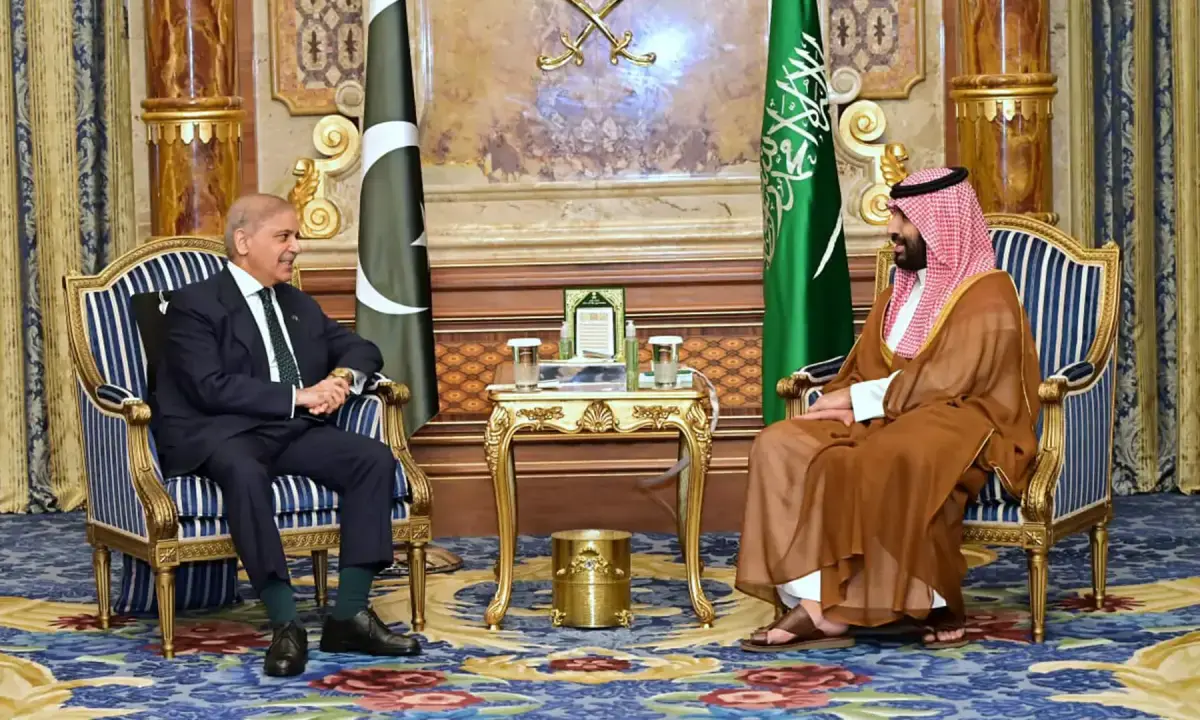
Prime Minister Shehbaz Sharif of Pakistan spoke with Saudi Crown Prince Mohammed bin Salman on Thursday, condemning Houthi attacks on Saudi oil tankers in the Red Sea. Prime Minister Sharif described these actions as "unacceptable," stating they violate international law, threaten freedom of navigation, and undermine regional peace and security. He reaffirmed Pakistan's solidarity with Saudi Arabia, conveying that he, Chief of Defence Forces and Chief of the Army Staff Field Marshal Asim Munir, and the nation stand firmly with the Saudi leadership and its people during this critical time. Both leaders agreed to enhance cooperation to maintain regional peace, security, and the uninterrupted flow of lawful maritime commerce through vital waterways like the Red Sea and the Strait of Hormuz.
The conversation followed Pakistan's strong condemnation the previous day of Houthi threats against Saudi Arabia and commercial shipping. Pakistan warned it reserves the right to take necessary self-defense measures if its maritime interests are targeted by hostile acts. This statement was a robust response to the Houthis' maritime embargo against Saudi Arabia and threats to close the Bab al-Mandeb strait, which Pakistan views as a critical artery for its trade and energy supplies. The Prime Minister's Office described the call as "most cordial," with the Saudi crown prince appreciating Pakistan's steadfast support and the close fraternal ties between the two nations. This exchange occurs less than a year after Pakistan and Saudi Arabia signed a Strategic Mutual Defense Agreement in September 2025, viewing aggression against one as aggression against the other.
This event highlights the escalating geopolitical tensions in the Red Sea region, directly impacting global maritime trade routes. Pakistan's strong public stance, particularly its explicit warning of self-defense, signals a potential recalibration of its regional security posture, possibly influenced by its defense agreement with Saudi Arabia. The incident underscores the systemic risks associated with conflicts in strategically vital chokepoints like the Bab al-Mandeb strait, which can disrupt energy supplies and international commerce. As AI-driven autonomous systems become more prevalent in naval operations and global logistics, the potential for miscalculation or escalation in such volatile environments warrants careful consideration of de-escalation mechanisms and international legal frameworks governing maritime security.
AI-generated to prompt reflection — not editorial opinion, not advice, not a statement of fact. How this works.