Pakistan PM Shehbaz Sharif travels to Iran for Supreme Leader Khamenei's funeral
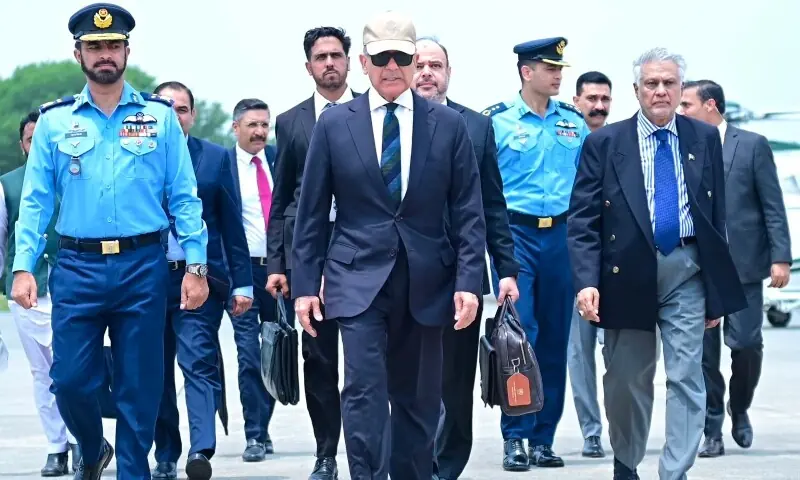
Prime Minister Shehbaz Sharif of Pakistan has departed for Iran to attend the funeral of Supreme Leader Ayatollah Ali Khamenei. The Prime Minister's Office announced Friday that Sharif was accompanied by a high-level delegation including National Assembly Speaker Ayaz Sadiq, Deputy Prime Minister and Foreign Minister Ishaq Dar, Information Minister Attaullah Tarar, PPP Chairman Bilawal Bhutto Zardari, PPP Secretary General Nayyer Bukhari, and Sindh Chief Minister Murad Ali Shah. The delegation aims to express condolences to Iranian leadership and reaffirm Pakistan's solidarity with Iran during this period of grief. Following his visit to Iran, Prime Minister Sharif is scheduled to travel to Turkiye. Earlier, Senate Chairman Yousaf Raza Gilani had already arrived in Tehran with a separate Pakistani delegation for the funeral services. Iranian officials welcomed the Pakistani delegations upon their arrival. The funeral ceremonies are expected to draw leaders from various countries, including Afghanistan, India, and Russia, and will proceed through significant religious and political sites in Iran, such as Qom, Karbala, Najaf, and Mashhad. The event occurs amidst a fragile ceasefire between Iran and the US, following an agreement to halt conflict. The source claims the Supreme Leader and several other senior Iranian officials, including Ali Shamkhani, were assassinated in strikes initiated by the US and Israel, which also targeted members of Khamenei's family. Iranian President Masoud Pezeshkian stated that a large public turnout at the funeral would be a strong response to terrorism and a demonstration of national unity.
The reported assassination of Iran's Supreme Leader and subsequent high-level international attendance at his funeral highlight significant geopolitical tensions and shifting regional dynamics. The narrative framing the event as a response to "terrorism, violence and bullying" by Iran's President suggests a strategic use of national mourning to consolidate domestic unity and project an image of resilience against external pressures. The mention of a "fragile ceasefire" and an "Islamabad Memorandum of Understanding" requires careful scrutiny, as it implies a formal de-escalation mechanism that may be susceptible to the volatile regional security environment. Future diplomatic and security frameworks in the Middle East will likely be shaped by how Iran navigates this period of leadership transition and its ongoing engagement with global powers, particularly in the context of evolving technological capabilities and their potential impact on state security and international relations.
AI-generated to prompt reflection — not editorial opinion, not advice, not a statement of fact. How this works.