Pakistan Police Arrest Activists in Lahore During Pro-Kashmir Solidarity Protest
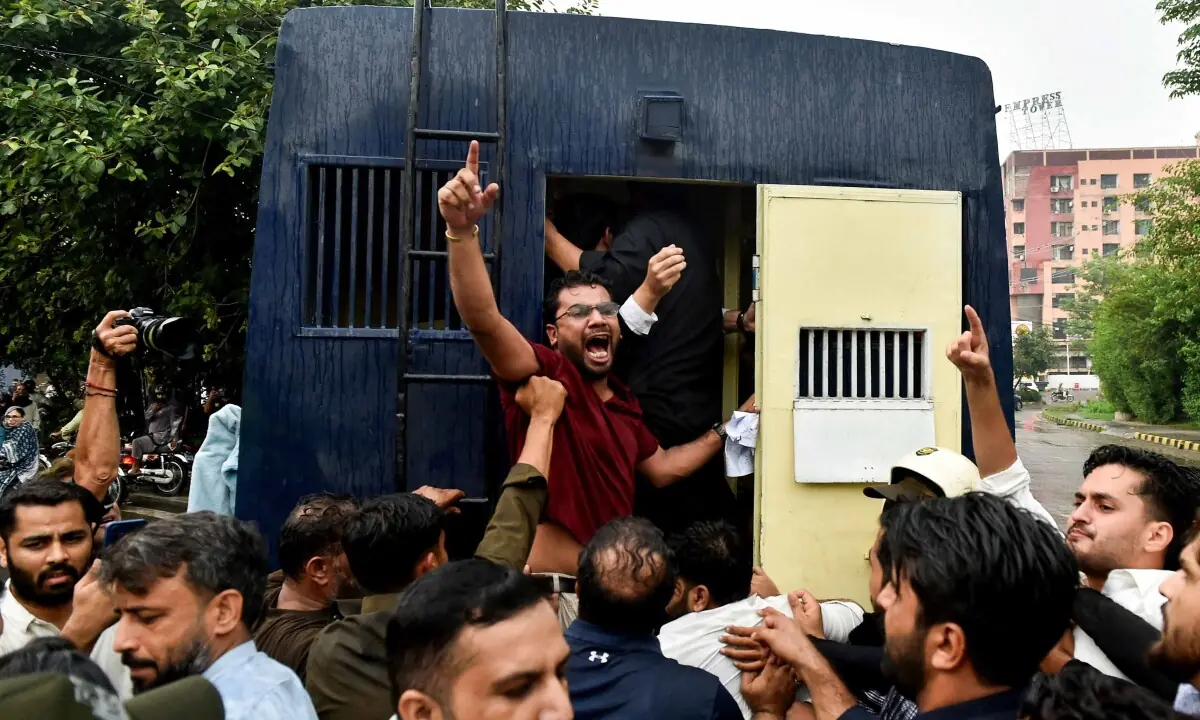
In Lahore, Pakistan, activists from the Haqooq-i-Khalq Party (HKP) were arrested on Friday, August 1st, 2026, while participating in a peaceful demonstration outside the press club. The protest aimed to express solidarity with the Joint Action Committee of Azad Jammu & Kashmir (AJK), which has been advocating for democratic rights and economic justice in Rawalakot and other AJK cities since early June. Prominent among the arrested was activist Farooq Tariq, who reported being dragged and harassed before being taken away in a police van. Dozens of other protesters, including Muzammil Kakar and Hussain Jameel Faridi, were also detained by Punjab Police. The HKP voiced deep concern over the arrests, demanding immediate disclosure of the detainees' whereabouts and their prompt release. The Pakistan Kissan Rabita Committee (PKRC) also condemned the arrests, particularly that of its Federal Committee member Farooq Tariq, deeming the incommunicado detention a violation of constitutional rights. The Joint Action Committee in Kashmir claims that 30 protesters have been killed by armed forces since July 27th and is demanding the abolition of 12 assembly seats allocated to Kashmiris residing in Pakistani cities. Following their release on the condition of no further demonstrations on Saturday, August 2nd, Farooq Tariq announced the rescheduling of the protest, urging supporters not to gather at the press club and to await further instructions regarding future demonstrations, which would be organized with permission.
The arrests of activists in Lahore during a pro-Kashmir solidarity protest highlight the tension between state authority and citizens' rights to assembly and expression. While authorities cited the need for permission, the activists framed their actions as a defense of constitutional rights, including freedom of speech and peaceful assembly. The situation reflects broader concerns about governance and accountability in the region, as articulated by the Joint Action Committee in AJK. Moving forward, navigating these competing demands will require a delicate balance between maintaining public order and upholding fundamental democratic freedoms. The use of incommunicado detention raises questions about due process and transparency, potentially undermining public trust and exacerbating grievances rather than resolving them. Future approaches could explore mechanisms for facilitating peaceful dissent while ensuring adherence to legal frameworks, thereby fostering a more stable and rights-respecting environment.
AI-generated to prompt reflection — not editorial opinion, not advice, not a statement of fact. How this works.