Pakistan Police Station Attacked by Militants, 11 Officers Killed
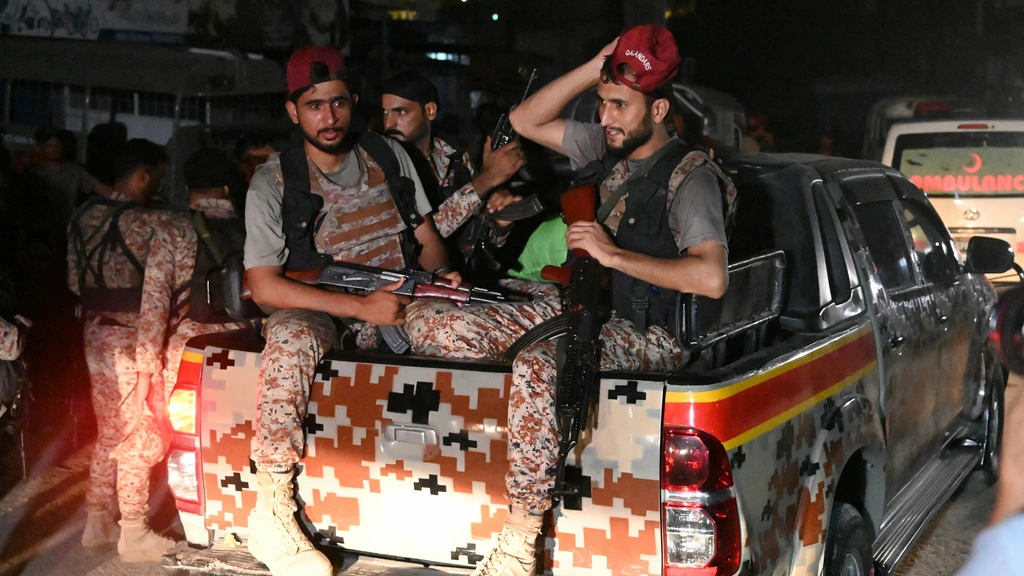
Eleven police officers were killed and over twenty injured in a drone and ground assault on a police station in northwestern Pakistan. This marks the second such attack on a police facility within a week. The latest incident occurred late yesterday in the Hangu district, near the Afghan border, a region known to harbor militant groups. The attackers detonated improvised explosive devices, leading to a firefight during which police reported killing fifteen militants. Heavy weaponry was employed, and reinforcements attempting to reach the station were ambushed, with an armored personnel carrier damaged. While no group has claimed responsibility, the Tehreek-e-Taliban Pakistan (TTP) is suspected, given their recent pattern of attacks targeting police and military installations. The TTP has been waging a war against the Pakistani state since 2007, seeking to overthrow the government and establish an Islamic regime. Following the Taliban's takeover of Afghanistan in 2021, the TTP has become more active, contributing to a significant increase in violence. Since late February, hundreds of people, primarily security personnel, have died in escalating attacks. Pakistan alleges that militants use Afghan territory for training and planning operations, a claim Kabul denies, stating that militant violence is Pakistan's internal issue. This tension led to retaliatory strikes between Pakistan and Afghanistan a month ago, resulting in numerous casualties.
This event highlights the persistent challenge of asymmetric warfare in Pakistan, particularly in regions bordering Afghanistan. The TTP's sustained campaign, intensified since the 2021 Taliban ascendance in Kabul, suggests a strategic advantage derived from the evolving regional security landscape. Pakistan's accusations regarding Afghan sanctuaries point to a complex geopolitical dynamic, where border security and state sovereignty are contested. The recurring nature of these attacks underscores the difficulty in eradicating entrenched militant networks and the potential for spillover effects. Moving forward, sustainable counter-insurgency strategies will likely require a multi-faceted approach, addressing not only immediate security threats but also the underlying socio-economic and political factors that contribute to radicalization, while navigating delicate diplomatic relations with neighboring states.
AI-generated to prompt reflection — not editorial opinion, not advice, not a statement of fact. How this works.