Pakistan Prepares for Floods Amidst Unreliable Data from India
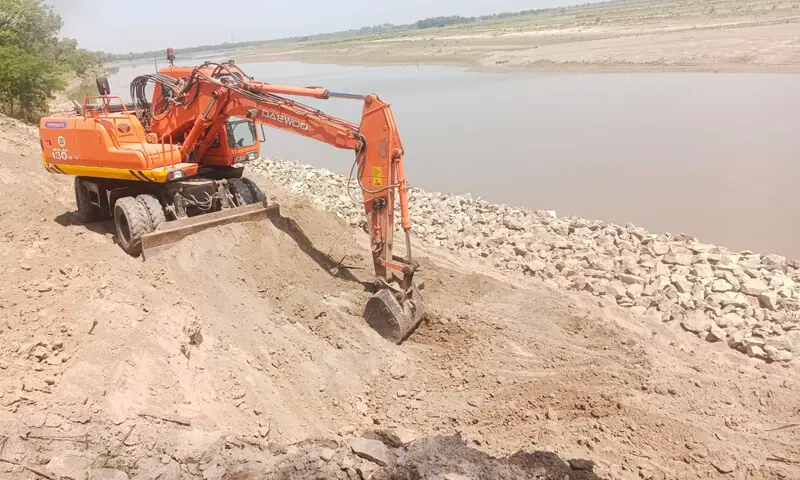
The Punjab government in Pakistan has instructed the irrigation department to prepare for potential high-alert flooding, citing significant uncertainty regarding river flows. This uncertainty stems from India's decision to suspend the Indus Waters Treaty in April of the previous year, leading to a lack of crucial river flow data. Officials are reportedly relying on less credible sources, such as social media, to assess the situation, which is insufficient for accurate predictions. Lahore Commissioner Nauman Yousaf has directed the irrigation department to implement extra precautionary measures, preparing for medium flood conditions as if they were high floods, and high flood conditions as if they were extreme. Deputy Commissioners in Lahore and Sheikhupura have been tasked with finalizing flood arrangements and have identified critical points along the Ravi River. An operation to clear temporary encroachments from the riverbed is also planned. A senior irrigation official confirmed these directives, acknowledging that India's reluctance to share data is a challenge but expressing confidence in their preparedness. Currently, water flow in the Ravi and other rivers like the Sindh, Kabul, Jhelum, Chenab, and Sutlej is normal, and officials are urging the public not to worry. All district administrations are directed to remain vigilant and coordinate with the irrigation department, with a specific focus on preventing sand excavation from prohibited sites near bridges and clearing bridge bays over the Ravi River to protect infrastructure. Last year's floods in August severely impacted Lahore, inundating residential areas and affecting over 82,000 people in the city alone, with significant damage also occurring in 31 villages along the river. Lahore experienced its worst floods in 1988 when the Ravi's flow exceeded its designed capacity, causing widespread destruction.
The situation highlights the critical dependence of disaster preparedness on transboundary data sharing, particularly in regions with shared river systems. India's unilateral suspension of data exchange, ostensibly linked to the Indus Waters Treaty, creates a significant vulnerability for Pakistan, forcing reliance on informal and less reliable information channels. This reliance on social media and other unverified sources for flood forecasting introduces a substantial risk of miscalculation, potentially leading to either over-preparation and resource misallocation or, more critically, under-preparation and catastrophic consequences. The directive to prepare for higher flood categories than current data might suggest reflects a pragmatic, albeit reactive, approach to managing this information deficit. Future water management strategies in such geopolitical contexts may need to incorporate robust, independent monitoring systems and diplomatic channels specifically designed to ensure continuity of essential environmental data, irrespective of broader political disputes, to safeguard populations and infrastructure.
AI-generated to prompt reflection — not editorial opinion, not advice, not a statement of fact. How this works.