Pakistan Pursues Eurasian Connectivity Through Trade and Infrastructure Projects
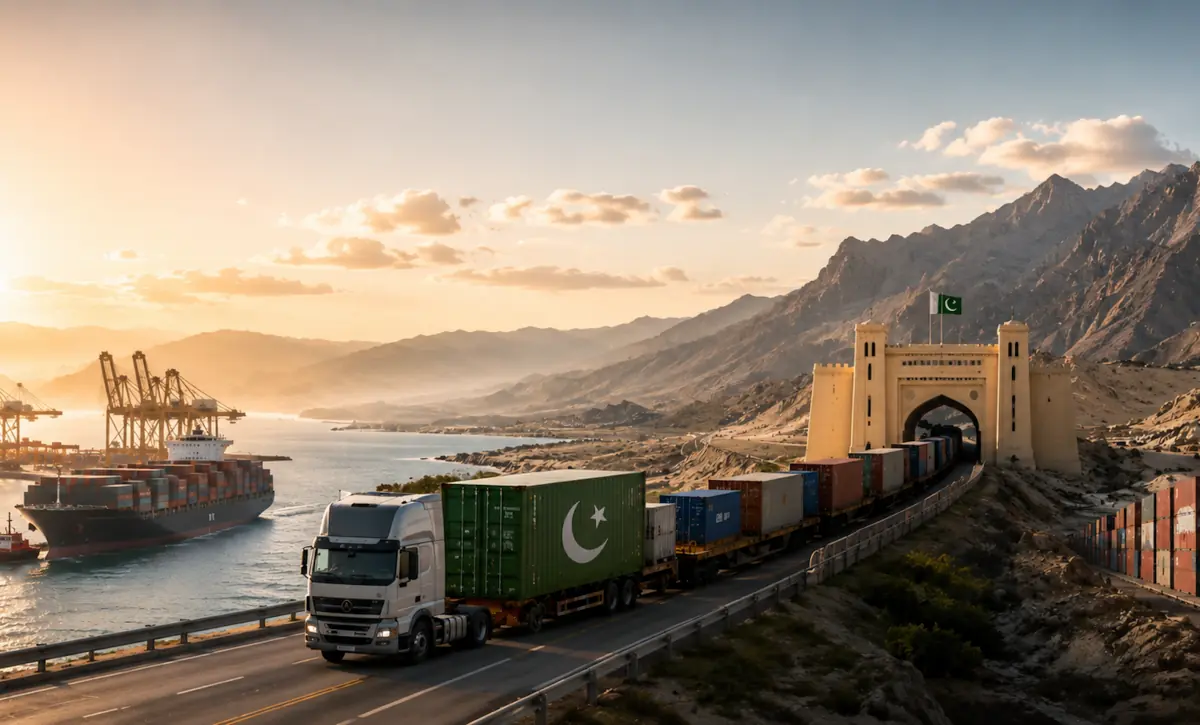
Pakistan is actively seeking to re-establish itself as a historical crossroads of trade and civilization by forging deeper economic ties with Afghanistan, Central Asian Republics (CARs), Russia, and China. This initiative is spearheaded by the Pakistan-Russia Business Council (PRBC), operating under the Federation of Pakistan Chambers of Commerce & Industry (FPCCI), which aims to foster commercial, educational, technological, and investment cooperation. The PRBC has facilitated numerous Memoranda of Understanding (MoUs) with regional chambers in Russia, encouraging collaboration across various sectors.
This renewed focus on economic cooperation draws inspiration from the successful barter and clearing-based trade arrangements between Pakistan and the Soviet Union from the 1960s to the 1980s. During that era, the Soviet Union provided Pakistan with heavy industrial equipment and technical assistance, while Pakistan exported commodities. This model, which minimized reliance on foreign exchange, is seen as particularly relevant today given Pakistan's current economic constraints. In 2023, Pakistan's Ministry of Commerce approved a barter trade mechanism with Russia, and the PRBC has also been instrumental in resolving issues like the approximately US$93.5 million Soviet-era debt, facilitating market access for Pakistani agricultural exports.
Beyond trade, Pakistan is exploring knowledge partnerships, with institutions seeking to leverage Russian expertise in STEM fields. MoUs signed in 2023 between Russian and Pakistani universities aim to enhance teacher training, academic exchanges, and joint research. A more ambitious proposal is the "Mir" Trade Route, envisioned as an economic corridor connecting Pakistan directly to Tajikistan via Afghanistan's Wakhan Corridor. This project, initially conceived as the Russia-Pakistan Economic Corridor (RPEC), proposes tunnels and an integrated network of highways, railways, and energy infrastructure. If realized, it could significantly reduce transit costs and times, positioning Pakistan as a regional logistics hub and providing Central Asian nations direct access to maritime trade. The estimated annual trade potential for the region is projected to reach US$2.7 trillion, with initial investment estimates around US$30 billion, potentially financed by a consortium of countries and financial institutions. However, the project faces significant challenges including political stability, security, environmental sustainability, financing, and engineering complexities, necessitating a phased approach starting with feasibility studies.
The initiative to reconnect Eurasia through Pakistan highlights a strategic pivot towards leveraging historical trade routes and reviving past economic models, particularly the barter system with Russia. This approach seeks to mitigate current foreign exchange constraints by facilitating trade through non-convertible currency mechanisms and bilateral clearing accounts. The proposed "Mir" Trade Route, while ambitious, represents a long-term vision for enhanced regional connectivity, aiming to unlock significant economic potential by providing Central Asian economies direct access to warm-water ports. The success of such large-scale infrastructure projects hinges on overcoming substantial geopolitical, security, and financial hurdles, requiring sustained regional cooperation and robust governance frameworks. Evaluating this strategy requires considering the evolving global trade landscape and the potential for such corridors to reshape regional economic dependencies and opportunities over the next decade.
AI-generated to prompt reflection — not editorial opinion, not advice, not a statement of fact. How this works.