Pakistan Railways Suspends Lahore-Faisalabad Link Due to Flood Damage
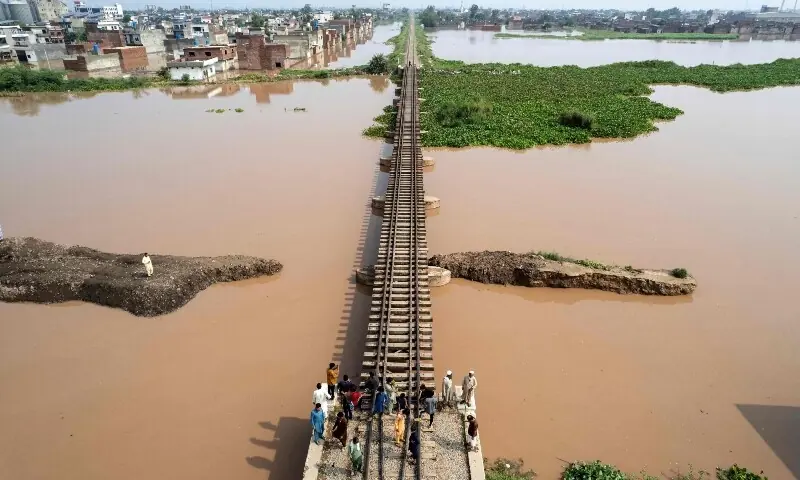
Floodwaters have severed a critical rail link between Lahore and Faisalabad, Pakistan, following breaches in the Deg and Bherr nullahs that eroded the foundations of two railway bridges. This disruption has forced Pakistan Railways to suspend all passenger and freight train operations on this vital section, including services to and from Karachi that would normally pass through Faisalabad. Twenty-five breaches have been reported along the affected route. Engineering teams are on standby, awaiting the recession of floodwaters to commence repairs on the damaged track and bridges.
In response to the suspension, trains bound for Karachi are being diverted via Sahiwal and Khanewal. Specific services like the Karakoram Express and Shalimar Express will bypass Faisalabad, rerouting through Sahiwal and Khanewal. Passengers with confirmed reservations for cancelled trains, including the Badr Express and Ghori Express which operate exclusively between Lahore and Faisalabad, are advised to seek full refunds. The Mianwali Express will also operate on an alternative route via Wazirabad and Lala Musa.
The Pakistan Meteorological Department (PMD) has warned of continued flood risks in major rivers, with the Ravi flowing at a medium flood level and the Chenab at a low flood level. The Tarbela dam's water level has risen significantly, nearing its maximum conservation capacity, with substantial inflow and outflow recorded. Authorities are advising passengers to stay updated on train schedules and operational changes through railway reservation offices and inquiry centers.
The extensive flooding and subsequent damage to critical infrastructure, such as the Lahore-Faisalabad railway line, highlight the vulnerability of transportation networks to extreme weather events exacerbated by climate change. The diversion of train services and the strain on resources like Tarbela dam underscore the immediate challenges faced by national infrastructure management. Looking ahead, a strategic focus on climate-resilient infrastructure development and enhanced flood forecasting systems will be crucial for mitigating future disruptions and ensuring the reliability of essential services. This event serves as a critical case study for long-term planning, emphasizing the need for proactive adaptation strategies to safeguard national connectivity and economic stability against increasingly severe environmental conditions.
AI-generated to prompt reflection — not editorial opinion, not advice, not a statement of fact. How this works.