Pakistan Reaffirms Commitment to SAARC Process Amidst Regional Tensions
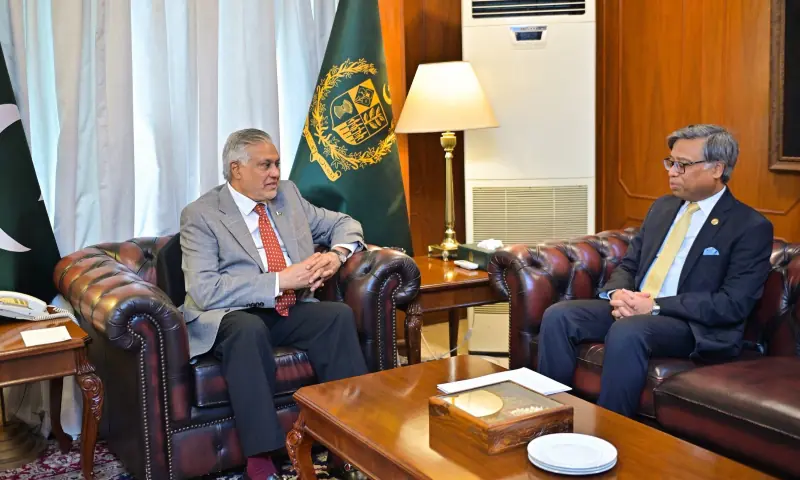
Deputy Prime Minister and Foreign Minister Ishaq Dar met with SAARC Secretary-General Golam Sarwar in Islamabad on Tuesday, reaffirming Pakistan's dedication to the South Asian Association for Regional Cooperation. The Foreign Office stated that Sarwar called on Dar at the Ministry of Foreign Affairs, where Dar praised Sarwar's efforts to foster regional cooperation. Dar emphasized the necessity of a revitalized SAARC, adhering to its charter principles, to enhance connectivity, development, and the collective welfare of South Asia, noting the region's significant demographic and economic potential. Secretary-General Sarwar expressed gratitude for Pakistan's constructive role in global peace and its sustained support for SAARC and its affiliated bodies. Dar also conveyed well wishes to Sarwar as his tenure as secretary-general concludes. The SAARC, comprising eight member states, has been hampered by challenges, primarily stemming from ongoing tensions between India and Pakistan, which have prevented SAARC summits since 2014. The 2016 summit in Islamabad was canceled after India's withdrawal, citing a terrorist attack in Uri, Kashmir. The SAARC charter mandates the participation of all member states for a summit to proceed. In a separate engagement, Foreign Minister Dar congratulated Aamir Khan on his appointment as Pakistan's Ambassador-designate to Nepal. Dar stressed the importance of deepening Pakistan-Nepal relations through increased cooperation in trade, tourism, education, and people-to-people exchanges, encouraging Khan to explore new economic collaboration avenues with Nepalese leaders and the business sector. He also acknowledged Khan's previous service as Director General (Americas) at the foreign ministry.
Pakistan's reaffirmation of its commitment to SAARC occurs against a backdrop of significant geopolitical challenges, particularly the protracted dispute with India, which has stalled the organization's progress since 2014. The emphasis on a 'revitalized SAARC' and leveraging regional potential suggests a strategic interest in multilateral engagement, potentially as a counterbalance to bilateral tensions or as a means to foster economic development independent of stalled political dialogues. The concurrent focus on strengthening bilateral ties with Nepal, including economic collaboration, indicates a pragmatic approach to regional diplomacy, prioritizing actionable partnerships even when broader regional mechanisms face obstacles. This dual strategy highlights the complex interplay between national interests, regional aspirations, and the persistent influence of inter-state conflict on the efficacy of multilateral institutions in South Asia, posing questions about the future viability of SAARC versus more targeted, bilateral or minilateral cooperation frameworks.
AI-generated to prompt reflection — not editorial opinion, not advice, not a statement of fact. How this works.