Pakistan Recovers 513 Smuggled Artifacts, Primarily Gandhara Relics, from US
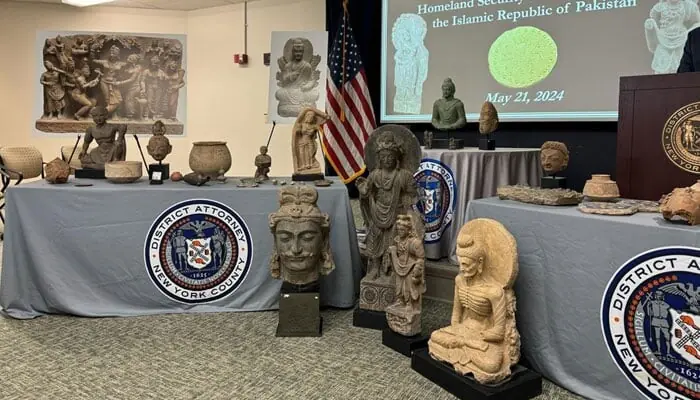
Pakistan has successfully repatriated 513 smuggled archaeological artifacts, predominantly from the Gandhara civilization, from the United States. These invaluable national treasures were seized by US authorities after being trafficked through illegal channels over several decades. The repatriation was revealed during a Senate Standing Committee on National Heritage and Culture meeting, chaired by Senator Hidayatullah Khan. Officials confirmed the artifacts are now in government custody and plans are underway to establish a new museum for their preservation and display, with land acquisition and public-private partnership options being explored. The committee has mandated a detailed report on the smuggling racket, including investigations, the recovery process, the estimated value of the artifacts, and the number of individuals involved. Separately, heritage officials briefed the committee on concerns raised by Unesco regarding conservation efforts at the Taxila archaeological sites, specifically Mohra Moradu and Sirkap. Unesco's reservations pertained to construction materials, methodology, and the height of reconstructed walls. Officials clarified that the Punjab government provided additional information as requested, and subsequent restoration work aligns with Unesco guidelines and internationally recognized principles for archaeological preservation. The committee also addressed the reported demolition of a historic Mughal-era arch near Rohara Village for a housing development, directing a thorough investigation. Pakistan currently has six Unesco World Heritage Sites and has submitted dossiers for 24 more, requesting priority for pending nominations.
The repatriation of 513 artifacts underscores the persistent challenge of illicit antiquities trafficking and the growing international cooperation to combat it. While the recovery is a significant win for Pakistan's cultural heritage preservation, it highlights systemic vulnerabilities that allowed these items to be smuggled over decades. The Senate committee's demand for a detailed report on the smuggling network is crucial for understanding and disrupting these operations. The engagement with Unesco regarding Taxila's conservation reflects the complex interplay between national heritage management, provincial responsibilities post-devolution, and international standards. Future challenges will involve balancing development pressures with heritage protection, ensuring transparent and internationally compliant conservation practices, and leveraging technology for both artifact tracking and site management to safeguard cultural legacies against both illicit trade and potentially detrimental restoration efforts.
AI-generated to prompt reflection — not editorial opinion, not advice, not a statement of fact. How this works.