Pakistan Revises Fuel Prices Upward Amid Global Market Volatility
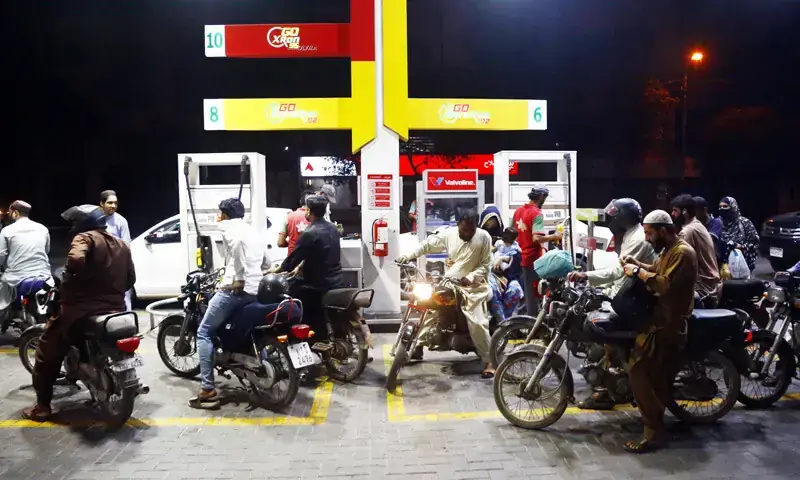
The Pakistani government has increased the prices of petrol by Rs3.66 per litre and high-speed diesel (HSD) by Rs4.80 per litre, effective July 25. These adjustments reflect the impact of fluctuating global oil prices, exacerbated by recent hostilities in the Persian Gulf. Consequently, the new price for petrol is Rs335.18 per litre, and for HSD, it is Rs383.46 per litre. The government levies a total of Rs110 per litre in taxes and duties on petrol and Rs96 on diesel. This marks a shift towards daily price revisions, a decision announced by Petroleum Minister Ali Pervaiz Malik, who stated that the Oil and Gas Regulatory Authority (Ogra) will now determine fuel prices daily based on international market trends. Previously, fuel prices were revised weekly since early March, with the government implementing conservation measures due to potential oil supply disruptions from the Middle East conflict. The All Pakistan Dealers Association has rejected the daily pricing mechanism and is considering a protest. Petrol price had previously peaked at Rs458.41 on April 3, and HSD at Rs520.35 on the same date, with prices rising significantly after the US-Iran conflict began on February 28. Petrol and HSD are critical for transportation and power generation, significantly impacting the middle and lower-middle classes and the broader public. These fuels are also substantial revenue sources for the government, with monthly sales ranging between 700,000 and 800,000 tonnes.
The government's decision to link domestic fuel prices to daily international market fluctuations, particularly in response to geopolitical tensions in the Persian Gulf, introduces significant volatility for consumers. While this policy aims to align local costs with global trends and potentially mitigate fiscal risks from subsidies, it places the burden of price instability directly on end-users. The daily revision mechanism, though intended to be responsive, may create planning challenges for businesses reliant on fuel, such as transportation and logistics, and disproportionately affect lower-income households. The rejection by the All Pakistan Dealers Association signals potential downstream economic friction. Moving forward, the sustainability of this pricing model will depend on the government's ability to manage the downstream economic impacts and ensure transparency in the daily price-setting process, especially given the substantial tax component already embedded in fuel costs.
AI-generated to prompt reflection — not editorial opinion, not advice, not a statement of fact. How this works.