Pakistan's Constitution and Balochistan: Examining Accession and Future Governance
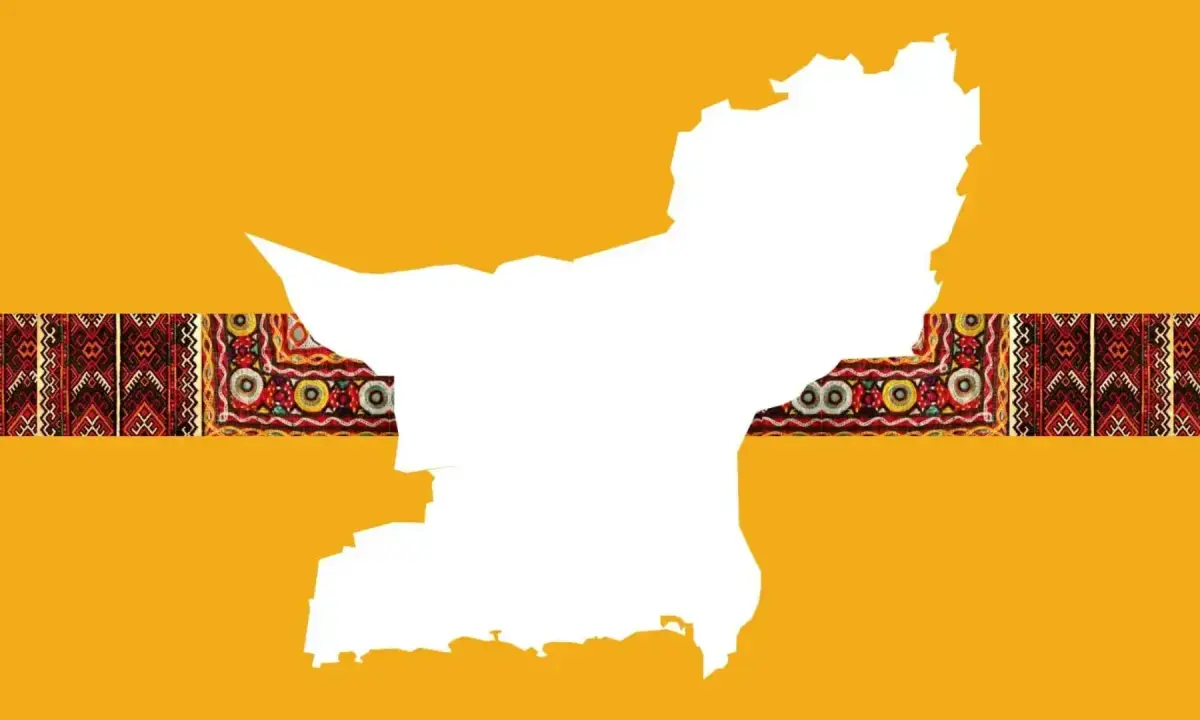
The article clarifies the historical context of Balochistan's accession to Pakistan, refuting the claim that the Instrument of Accession signed by Khan Ahmed Yar Khan on March 27, 1948, represents the entire province's accession as a unified sovereign state. It explains that prior to 1947, the region comprised a mosaic of distinct entities, including the Khanate of Kalat, princely states of Makran, Kharan, and Lasbela, and British Balochistan districts, each acceding separately. The unified provincial structure familiar today was established through the Constitution of 1973, a modern construct rather than an ancient reality. The article emphasizes that Pakistan's Parliament, through its constitutional authority, has the power to reform or restructure the province, citing Article 239 and the Objective Resolution as foundational for safeguarding national integrity and enabling boundary adjustments for better governance and security. It argues for reorganizing Balochistan into smaller administrative units, asserting this would enhance local governance, improve resource distribution, strengthen administrative responsiveness, and increase representation, thereby weakening separatist narratives. The purchase of Gwadar from Oman in 1958 is also highlighted as a separate federal acquisition, distinct from provincial accession, and the article suggests Parliament could restore it to full federal control for strategic development. Ultimately, the piece posits that a constitutional amendment to redraw provincial boundaries, based on historical realities and the need for effective governance, offers a constructive counter-narrative to separatism and militancy, fostering a more cohesive future for Balochistan and Pakistan.
The article presents a constitutional and historical argument for restructuring Balochistan, framing it as a necessary step for improved governance, national cohesion, and counter-terrorism efforts. By emphasizing the constitutional basis for Parliament's authority to alter provincial boundaries, it seeks to legitimize potential reforms and counter separatist narratives that rely on a specific interpretation of historical accession. The proposed reorganization into smaller units is presented as a mechanism to enhance administrative efficiency and local representation, potentially addressing governance deficits and reducing the appeal of insurgent groups. This perspective suggests that a proactive constitutional approach, rather than solely relying on security operations, can be a more effective strategy for long-term stability and national integration. The analysis highlights the interplay between historical narratives, constitutional powers, and contemporary governance challenges in shaping regional dynamics.
AI-generated to prompt reflection — not editorial opinion, not advice, not a statement of fact. How this works.