Pakistan's Deputy PM Dar Arrives in Manila for ASEAN Regional Forum Meeting
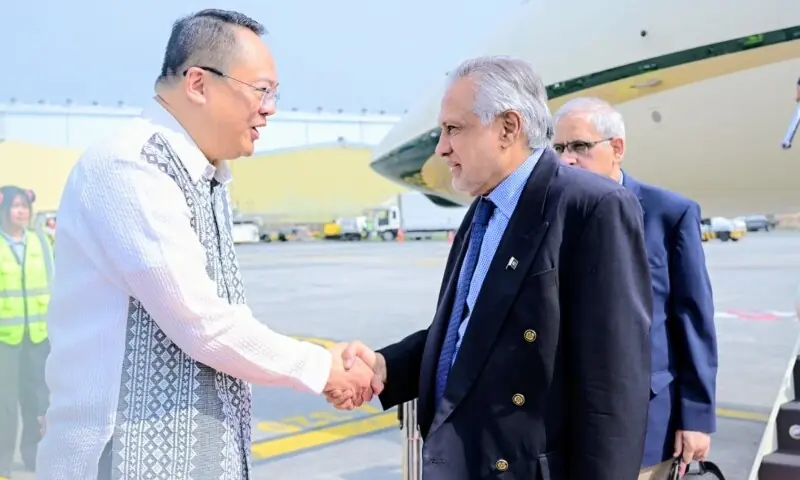
Pakistan's Deputy Prime Minister and Foreign Minister Ishaq Dar arrived in Manila, Philippines, on Wednesday to attend the 33rd ASEAN Regional Forum (ARF) ministerial meeting. The Foreign Office (FO) stated that Dar has a packed schedule, including participation in the ARF plenary session and bilateral meetings with other foreign ministers on the sidelines. Upon his arrival, he was greeted by Elmer G. Cato, Assistant Secretary at the Philippines' Department of Foreign Affairs, Pakistan's Ambassador to the Philippines Asima Rabbani, and other officials. The FO also mentioned that the high-level meeting will convene foreign ministers and delegates from 27 ARF member states, along with the ASEAN Secretary General. Minister Dar is expected to engage in discussions focused on political and security matters impacting the Asia-Pacific region, emphasizing the promotion of peace, stability, and cooperation through ongoing dialogue and diplomacy. He will also conduct separate bilateral meetings with his Philippine counterpart and other dignitaries. Established in 1994, the ARF serves as a key platform for multilateral discussions on regional security. Pakistan, a member since 2004, has consistently played an active role, contributing constructively to the forum's objectives and programs.
The participation of Pakistan's Deputy Prime Minister Ishaq Dar in the ASEAN Regional Forum highlights the ongoing importance of multilateral diplomacy for addressing regional security challenges. The ARF provides a structured environment for dialogue among diverse member states, aiming to foster stability and cooperation. For Pakistan, active engagement in such forums is crucial for navigating complex geopolitical dynamics and projecting its foreign policy objectives in the Asia-Pacific. The emphasis on sustained dialogue and diplomacy suggests a strategic approach to conflict prevention and resolution, aligning with broader international efforts to maintain peace. Future engagements within the ARF will likely continue to test the efficacy of diplomatic frameworks in managing evolving regional security landscapes and promoting collective interests.
AI-generated to prompt reflection — not editorial opinion, not advice, not a statement of fact. How this works.