Pakistan's Deputy PM Meets Kyrgyz President and China's FM at SCO Meeting
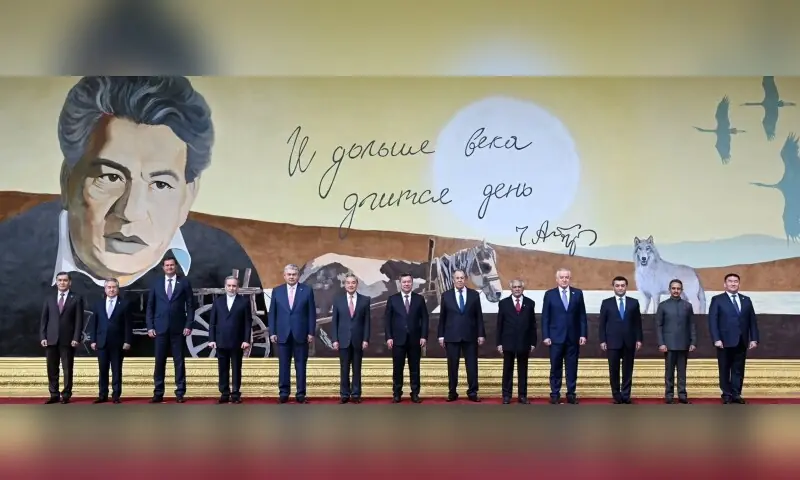
Deputy Prime Minister and Foreign Minister Ishaq Dar held separate meetings with Kyrgyz Republic President Sadyr Nurgozhoevich Zhaparov and China's Foreign Minister Wang Yi on Friday. These discussions took place on the sidelines of the Shanghai Cooperation Organisation (SCO) Council of Foreign Ministers’ meeting. During his meeting with Wang Yi, Dar and the Chinese minister engaged in a productive exchange regarding bilateral relations, regional developments, and multilateral cooperation. Wang Yi conveyed his best wishes to Pakistan for its upcoming chairmanship of the SCO Council of Heads of State and its role in hosting the SCO Summit in 2027. Dar expressed gratitude for China's appreciation of Pakistan's diplomatic efforts towards regional peace and stability. In his meeting with President Zhaparov, Dar thanked him for the hospitality during the SCO event. Their conversation focused on regional and global developments, as well as the SCO's growing importance as a cooperation platform. Dar emphasized the need for continued collaboration among SCO member states, especially as Pakistan prepares to chair the SCO in 2026-27. The SCO, initially a security group founded in 2001, now serves as a forum for regional trade and economic development, with 10 member states including India, Iran, China, Pakistan, Russia, Kyrgyzstan, Belarus, Kazakhstan, Tajikistan, and Uzbekistan, and two observer states, Afghanistan and Mongolia. This follows a recent commitment by Pakistani President Asif Ali Zardari and Kyrgyz President Zhaparov to enhance bilateral ties, particularly in trade, economic, and investment cooperation.
The SCO meeting highlights the evolving geopolitical landscape where regional organizations are increasingly serving dual roles in security and economic development. Pakistan's upcoming chairmanship underscores its strategic positioning and diplomatic engagement within this bloc. The interactions between Pakistan, China, and Kyrgyzstan reflect ongoing efforts to strengthen bilateral ties and regional cooperation amidst broader global shifts. Future developments will likely depend on the member states' ability to balance national interests with collective objectives, particularly concerning economic integration and stability in Central and South Asia. The organization's expansion and increasing focus on economic cooperation suggest a strategic pivot, potentially influencing trade flows and investment patterns in the coming decade.
AI-generated to prompt reflection — not editorial opinion, not advice, not a statement of fact. How this works.