Pakistan's Economic Recovery Stalls Amid Rising Inflation and Fiscal Strain
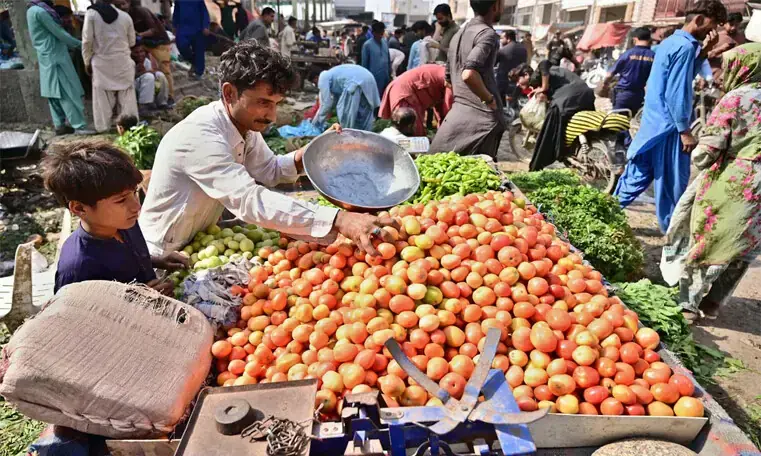
Pakistan's economic recovery, which began in 2025, is facing significant headwinds due to geopolitical factors, leading to a resurgence of inflation and diminished monetary freedom. Consumer Price Index (CPI) inflation re-entered double digits, ranging from 10.9% to 11.7% between April and June 2026, while the Sensitive Price Index (SPI) reached 12.8% by June. This inflationary pressure is particularly burdensome in an economy where approximately 80% of the labor force operates informally, as reported by the Labour Force Survey 2025.
A report by the Policy Research Institute of Market Economy (Prime) highlights that debt servicing and defense expenditures consume a staggering 94% of net federal revenue. This leaves only 6% for essential government functions like health, education, infrastructure, and social protection. The report criticizes the current policy response, which it deems reactive and focused on "stabilization" as required by the International Monetary Fund (IMF). Instead, Prime advocates for a shift towards a resilience-driven framework that prioritizes economic freedom, defined as the ability of individuals to control their property and labor.
Prime also points to significant disparities in the tax system, where salaried individuals face a much higher effective tax rate (33.29%) compared to businesses with similar incomes under presumptive tax schemes (0.5%). While the Budget 2026-27 offered some relief to salaried taxpayers and reduced the super tax, it did not address this fundamental gap. The think tank suggests lowering tax rates by broadening the tax base, reducing the GST to 15%, cutting corporate tax to 25%, and abolishing the super tax. Furthermore, Prime recommends reducing government borrowing, legislating a 15% customs duty ceiling, and enhancing transparency in fuel pricing.
The analysis suggests that Pakistan's economic challenges stem from a structural imbalance between revenue generation and expenditure, exacerbated by a heavy reliance on borrowing and a tax system that disproportionately burdens formal sector employees. The report's critique of the government's fiscal policies and its comparison to international indices like the Heritage Foundation's Index of Economic Freedom highlight a significant gap between perceived economic health and on-the-ground realities. The dominance of the informal sector and the concentration of credit by the government over the private sector indicate systemic issues that require more than reactive stabilization measures. Future policy directions should focus on creating a more equitable and efficient tax structure, fostering private sector growth through reduced government borrowing, and enhancing regulatory transparency to build sustainable economic resilience.
AI-generated to prompt reflection — not editorial opinion, not advice, not a statement of fact. How this works.