Pakistan's FCC Overturns SC/IHC Rulings on Margalla Hills Restaurant Demolitions
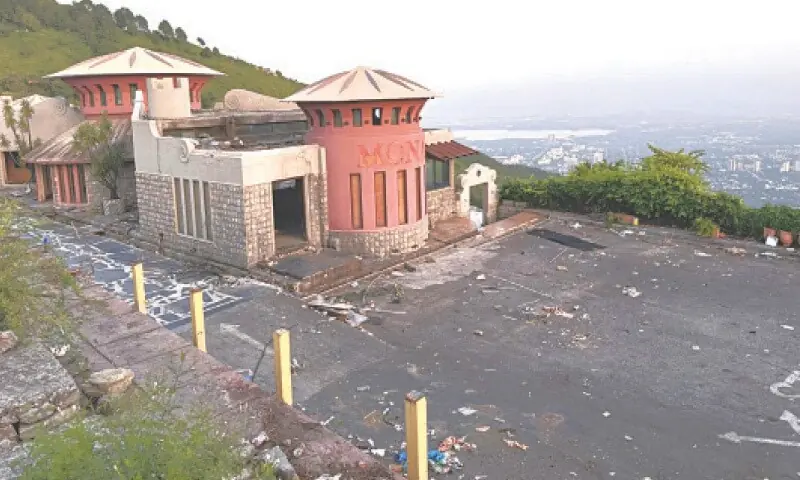
The Federal Constitutional Court (FCC) of Pakistan has declared the Supreme Court (SC) and Islamabad High Court (IHC) decisions leading to the demolition of Monal Restaurant and other establishments in Margalla Hills National Park (MHNP) a "grave miscarriage of justice." A three-member FCC bench, led by Justice Syed Hasan Azhar Rizvi, accepted review petitions from the Capital Development Authority (CDA) and Metropolitan Corporation Islamabad (MCI). These petitions challenged the SC's August 21, 2024 order, which had deemed all leases, licenses, and permissions for restaurant operations within the park illegal, citing the Islamabad Wildlife (Protection, Preservation and Management) Ordinance of 1979. This ruling had paved the way for the closure and subsequent demolition of Monal, La Montana, and Gloria Jeans restaurants.
The FCC bench, including Justices Aamer Farooq and Syed Arshad Hussain Shah, asserted that issues concerning the restaurant sites' entitlement, ownership, lease to Monal Group, and rent recovery involved disputed facts requiring adjudication by a civil court. The court set aside the SC's conclusion that any permits granted by authorities like the CDA were contrary to the Wildlife Ordinance. It emphasized that the MHNP falls under the Islamabad Capital Territory (ICT) and is subject to its laws, with construction approvals for public purposes within the park falling under the CDA's jurisdiction. Consequently, the FCC annulled the SC's findings regarding the Islamabad Wildlife Management Board's (IWMB) entitlement to collect rent and issue licenses, stating that the CDA would now regulate MHNP administration according to applicable laws. The court noted that the 1979 ordinance had been repealed, and the Nature Conservation and Wildlife Management Board, established under the 2024 Act, is now responsible for implementing its provisions, including ensuring compliance for public buildings within the park.
The FCC also criticized the IHC's judgment for overlooking legal positions and causing injustice. It ordered that civil suits related to these matters be consolidated and proceed from their previous stages, allowing plaintiffs to seek interim relief if necessary, independent of prior judgments. The court stressed that consequential judgments based on a reviewed SC order cannot stand independently. The FCC expressed regret that the SC made final determinations on issues within the civil court's purview during interlocutory proceedings, prejudging disputes and affecting parties not heard, violating Article 10-A of the Constitution. The court affirmed its duty to correct manifest wrongs, stating that procedural rules should not obstruct justice, and that law must serve justice.
This FCC ruling highlights a significant judicial conflict regarding land use and environmental protection within a national park. The court's assertion of a "grave miscarriage of justice" suggests a perceived overreach by the SC and IHC, particularly in making definitive factual findings on matters typically reserved for civil courts. The FCC's emphasis on due process and the rights of parties not heard underscores the principle that even high court judgments cannot override fundamental legal safeguards. The shift in administrative authority back to the CDA, coupled with the acknowledgment of a repealed ordinance and a new governing act, points to ongoing legal and regulatory complexities. This situation prompts reflection on the interplay between environmental preservation mandates, property rights, and the procedural integrity of judicial review, particularly when decisions have profound economic and social consequences for businesses and communities. The FCC's stance suggests a need for clearer jurisdictional boundaries and more robust procedural adherence to ensure that judicial interventions, while necessary for justice, do not inadvertently create new injustices or undermine established legal processes.
AI-generated to prompt reflection — not editorial opinion, not advice, not a statement of fact. How this works.