Pakistan's FCC Rules Industrial Land Cannot Be Converted to Housing
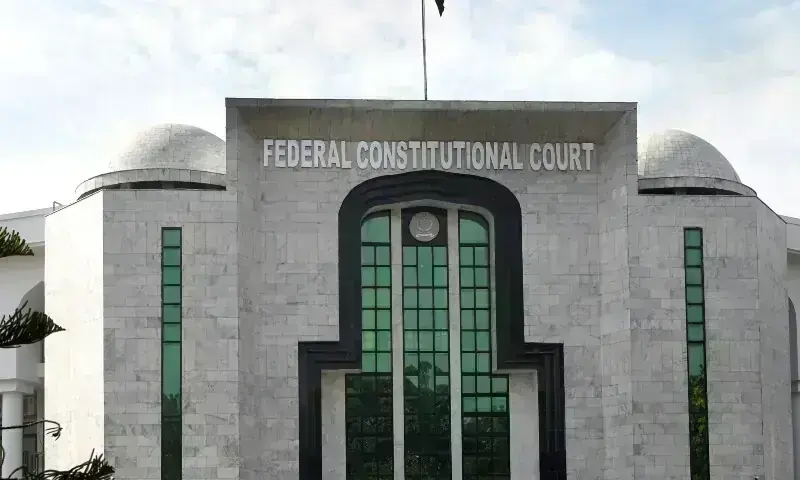
The Federal Constitutional Court (FCC) of Pakistan has ruled that land acquired for a specific public purpose, such as industrial development, cannot be converted into residential housing schemes. This landmark decision upholds a Peshawar High Court (PHC) ruling and may set a precedent for national land use policy. FCC Chief Justice Aminuddin Khan stated that the land in question, originally acquired for Paper and Board Mills, could not be claimed by the petitioner company for conversion into a housing scheme as an absolute right.
The case involved M/s Adil International (Pvt) Ltd, which purchased the assets of Adamjee Papers and Board Mills in 2000. After dismantling the unusable factory, the company sought to convert the 1,020 kanals and 19 marlas of land in Nowshera, Khyber Pakhtunkhwa, into a housing project. Despite obtaining approvals and initially being granted a no-objection certificate (NOC) following court orders, subsequent government directives restricted the land's use and transfer, leading to registration issues for sale deeds.
The FCC emphasized that land acquired for a specified public purpose remains bound to that purpose, even after subsequent transfers or judicial sales. The court affirmed that beneficiaries or subsequent purchasers do not gain an unfettered right to change the land's use without prior provincial government sanction and adherence to the original acquisition agreement terms. The FCC found no illegality in the PHC's judgment and dismissed Adil International's appeal.
This FCC ruling addresses a critical tension between original public purpose land acquisition and private sector development interests. By reinforcing the principle that land acquired for a specific public objective retains that character, the court aims to prevent the erosion of industrial zones and ensure adherence to the terms under which land was originally procured. The decision highlights the importance of robust land governance frameworks that clearly delineate and enforce land use designations. Future implications may involve increased scrutiny of past land conversions and a potential re-evaluation of land acquisition policies to better safeguard public interest against opportunistic re-zoning, particularly as urban development pressures intensify.
AI-generated to prompt reflection — not editorial opinion, not advice, not a statement of fact. How this works.