Pakistan's Foreign Minister Highlights Geographic Location as Economic Asset
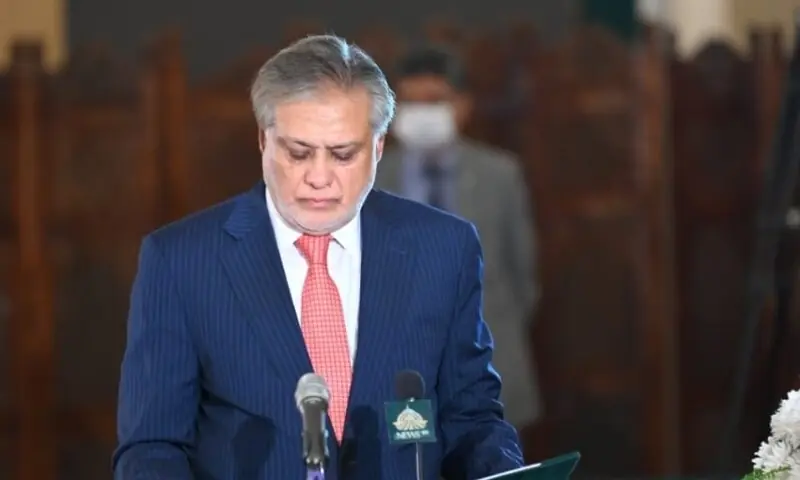
Pakistan's Deputy Prime Minister and Foreign Minister, Ishaq Dar, has emphasized the strategic value of the country's geographical location, describing it as an asset at the intersection of Central, South, and West Asia that requires full exploration. He believes that enhancing connectivity will unlock significant economic benefits for Pakistan. Dar made these remarks on Saturday while presiding over a high-level meeting focused on improving port connectivity and the efficiency of Pakistani ports. The maritime affairs secretary provided a comprehensive briefing on the current state and utilization capacity of these ports. The meeting participants discussed measures to boost the efficiency and competitiveness of Pakistan's ports, streamline operations, strengthen inter-agency coordination, facilitate trade and logistics, and implement reforms to establish the country's ports as key regional trade hubs. In a separate meeting concerning economic diplomacy, Mr. Dar stressed the need to intensify international and regional efforts to promote Pakistan's economy. This includes ensuring greater adherence to international standards and obligations. He chaired an inter-ministerial meeting to review the nation's progress in economic diplomacy, attended by senior officials including Tariq Bajwa and secretaries from the foreign affairs and Cabinet Divisions. During this session, Mr. Dar reiterated the government's dedication to achieving sustainable economic stabilization and urged stakeholders to escalate their efforts. He also reaffirmed the government's commitment to maintaining a consistent supply of sugar at accessible prices.
Foreign Minister Ishaq Dar's assertion frames Pakistan's geography as a latent economic advantage, contingent on infrastructure development and improved connectivity. This perspective highlights the potential for trade route optimization and regional integration, a strategy common among nations seeking to leverage their physical location. The focus on port efficiency and economic diplomacy suggests a policy direction aimed at attracting investment and facilitating trade flows. Looking ahead, the success of such initiatives will likely depend on sustained geopolitical stability, effective governance in managing trade agreements, and the ability to adapt to evolving global supply chains in the coming decade. The challenge lies in translating this geographical potential into tangible economic gains amidst complex regional dynamics and international economic pressures.
AI-generated to prompt reflection — not editorial opinion, not advice, not a statement of fact. How this works.