Pakistan's Interior Minister's Proposal for New Provinces Faces Strong Opposition
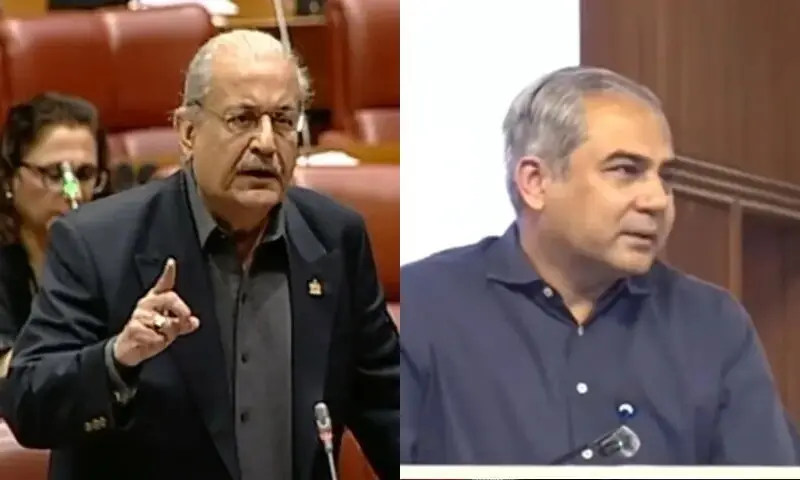
Interior Minister Mohsin Naqvi's recent proposal to restructure Pakistan's governance by creating new provinces has encountered significant pushback from key coalition partners and political figures. Defence Minister Khawaja Asif, while personally agreeing with Naqvi's assessment of the system's "dire state," urged the Interior Minister to first focus on implementing the National Action Plan (NAP) within his own ministry. Asif suggested that any overhaul should proceed through constitutional channels like parliament or the federal cabinet, rather than public statements made outside these forums. He also pointed out that Naqvi, despite holding a powerful position for three years, had not previously raised these systemic concerns. Asif further called on Naqvi, who also heads the Pakistan Cricket Board (PCB), to initiate reforms within the PCB, highlighting that Naqvi has full authority there. Former Senate Chairman Mian Raza Rabbani also strongly opposed the idea of new provinces, arguing that Pakistan's governance issues stem from constitutional violations and the erosion of provincial autonomy, not the current administrative structure. Rabbani cited factors like the weakening of democratic institutions, centralization of power, and disregard for the rule of law as root causes. He proposed strict adherence to the 1973 Constitution, upholding the rule of law, ensuring provincial autonomy, respecting the trichotomy of powers, and devolving authority to local governments as solutions. The military's spokesperson had previously supported an administrative reset to improve governance, emphasizing the need to adapt to modern demands.
The debate over creating new provinces in Pakistan highlights a fundamental tension between administrative reform and constitutional adherence. While Interior Minister Naqvi's call for new provinces aims to improve service delivery and accountability, critics argue that such a structural change distracts from more pressing issues like constitutional violations and the erosion of democratic processes. The pushback suggests that powerful actors prioritize addressing governance failures through existing legal and political frameworks, emphasizing the need for institutional strengthening rather than boundary redrawing. This situation underscores a recurring challenge in governance: whether systemic problems are best solved by restructuring administrative units or by reinforcing the integrity and functionality of existing institutions and constitutional principles. The differing perspectives, particularly from figures like Khawaja Asif and Mian Raza Rabbani, reflect a broader discourse on the balance of power, federalism, and the rule of law in Pakistan's political landscape, with implications for future governance models in an era demanding greater efficiency and public trust.
AI-generated to prompt reflection — not editorial opinion, not advice, not a statement of fact. How this works.
