Pakistan's NAB Reports Rs2.45 Trillion in Asset Recoveries for Q2 2026
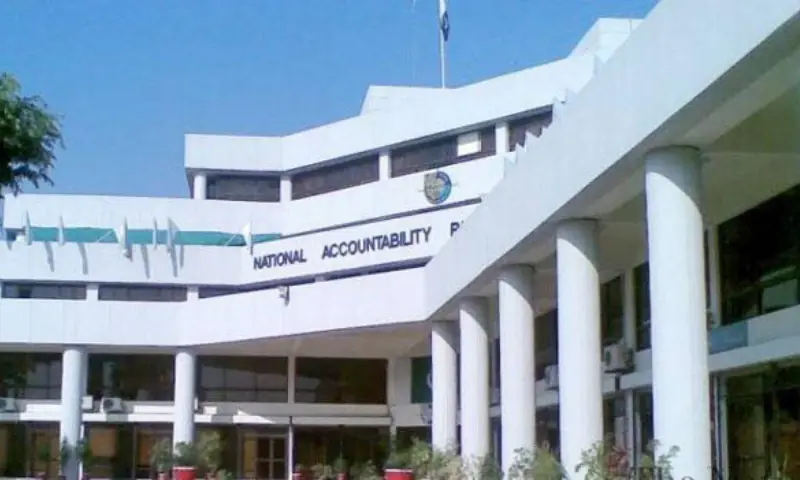
The National Accountability Bureau (NAB) of Pakistan has announced the recovery of state assets valued at Rs2.45 trillion during the second quarter of 2026. This figure contributes to a total recovery of Rs5.41 trillion for the first six months of 2026, marking the highest six-month recovery in the bureau's history. A significant portion of these recoveries involved land, with over 1,078,283 acres of state land reclaimed across Balochistan, Sindh, Punjab, and the Islamabad Capital Territory (ICT). NAB Sukkur led the recoveries, reclaiming 853,678 acres worth Rs1.01 trillion for various government departments. NAB Balochistan recovered 209,544 acres, including land within Hingol National Park and for the Gwadar Industrial Estate Development Authority, valued at Rs604.64 billion. Additionally, NAB Karachi retrieved 11,422 acres of allegedly illegally allotted land worth Rs467.11 billion, while NAB Lahore recovered 1,909 acres valued at Rs288.29 billion. NAB Islamabad and Rawalpindi recovered 810 acres worth Rs66.63 billion, and NAB Multan recovered 920 acres valued at Rs2.76 billion. Beyond land, the bureau compensated over 24,365 individuals affected by housing and financial fraud, returning Rs42.30 billion in money and assets. The NAB spokesperson highlighted a broader recovery of Rs16.94 trillion from March 2023 to June 2026. The bureau is also undergoing a digital transformation, fully implementing an E-Office system and transitioning to an AI-based E-Investigation regime designed to enhance efficiency and reduce human discretion in investigations.
The National Accountability Bureau's reported asset recoveries, particularly land reclamation, represent a significant operational output. The bureau's stated shift towards AI-powered investigations suggests an attempt to leverage technology for increased efficiency and potentially reduce the influence of human bias in case selection and evidence analysis. This technological integration could streamline processes, but its long-term effectiveness will depend on the robustness of the AI algorithms, data security, and the ability to ensure that automated systems do not introduce new forms of systemic bias. The substantial figures reported also invite scrutiny regarding the valuation methodologies for recovered assets, especially land, and the consistency of recovery efforts across different regions and case types. Future analysis should consider the sustainability of these recovery rates and the impact of technological adoption on the bureau's overall governance and accountability framework.
AI-generated to prompt reflection — not editorial opinion, not advice, not a statement of fact. How this works.
